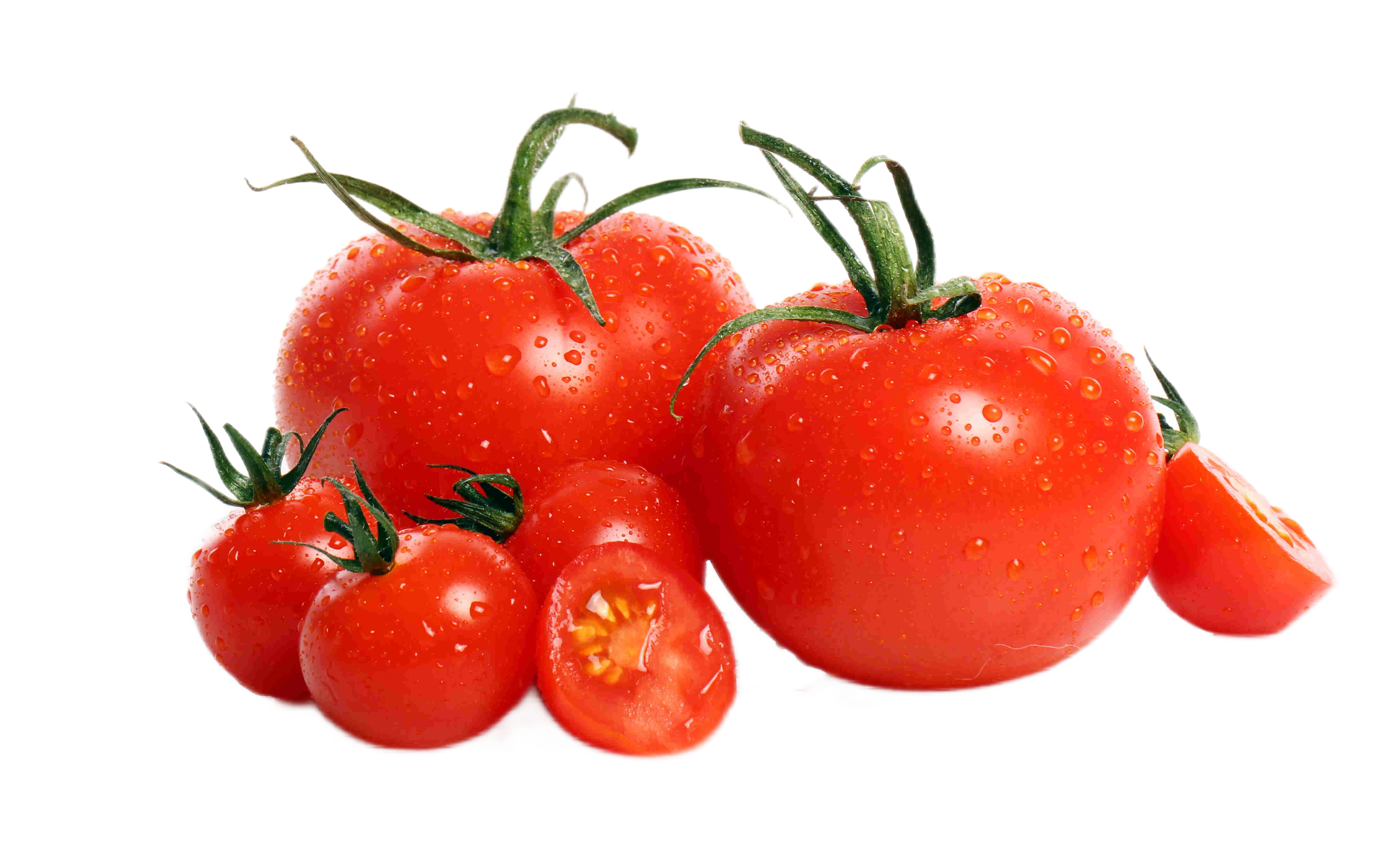
Recommendations and fertilizer rates for tomatoes

- To exact determination and calculation the required amount of fertilizer application, it is recommended to conduct soil agrochemical analysis, taking into account the planned yield indicators.
- We recommend to discuss nutritional special aspects with your regional manager.
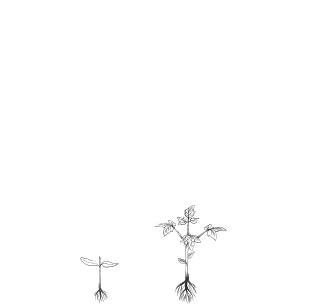
BBCH 13-19
(Leaves development)
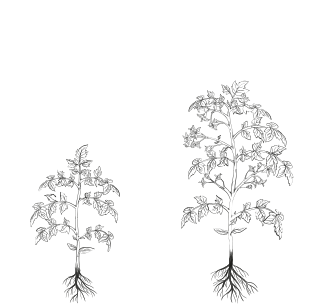
BBCH 31-59
(Stem elongation and Budding)
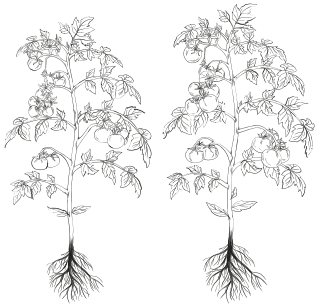
BBCH 71-79
(Development of fruit)
BBCH 13-19
(Leaves development)
(Leaves development)
This macro stage develops from the first true leaf and continues up to nine or more true leaves. First, the rudimentary stem nodes and internodes are established. The plant needs sufficient supplies of macronutrients such as phosphorus and potassium. When exposed to environmental and anthropogenic influences, amino acids are needed to eliminate them.
Leaves originate on the sides of the shoot tip. A local concentration of cell divisions marks the very beginning of the leaf; these cells then enlarge to form a nipple-shaped structure called a leaf support. The cells of the leaf support can be derived from the sheath or from the sheath and the hull. The support then becomes more and more flattened in the transverse plane due to laterally oriented cell divisions and subsequent expansion on both sides.
After that, the prop becomes more and more flattened in the transverse plane due to laterally oriented cell divisions and subsequent expansion on both sides. The dividing zones are the marginal meristems, through the activity of which the leaf acquires its lamellar shape. In each meristem, the outer array of cells or marginal initials contribute to the epidermal layers by prolonged division. The cells below, the submarginal initials, provide the tissue of the inner part of the leaf.
Usually, a certain number of cell layers are defined in the mesophyll (the parenchyma between the epidermal layers of the leaf). Cell division is not limited to the region of the marginal meristems, but continues throughout the leaf in each of the layers, always in the same plane, until the final cell number is approached. Then the rate decreases, terminating in different layers at different times. The divisions usually end first in the epidermis, then in the lower layers of the leaf mesophyll.
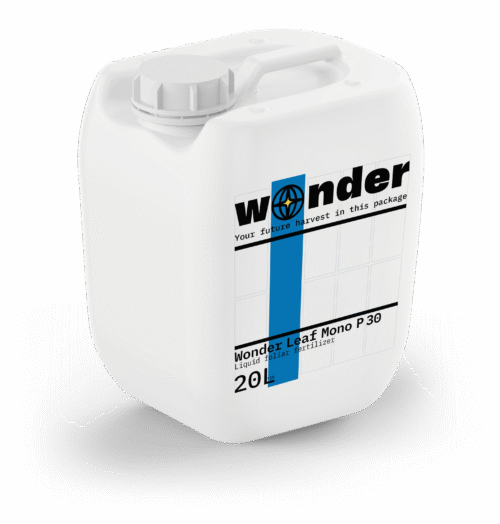
More about the product
- Form: Liquid
- Packaging: 1l, 5 l, 20 l
P₂O₅
Phosphorus pentoxide
N
Total Nitrogen
B
Boron
Zn
Zinc chelate
Amino acids
Vegetable origin
Organic acids
pH
Density
(kg/l)
Your future harvest in this package!
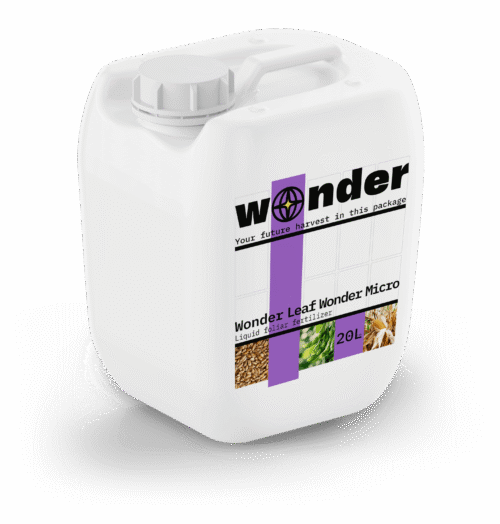
More about the product
- Form: Liquid
- Packaging: 1l, 5 l, 20 l, 1000 l
N
Total Nitrogen
MgO
Magnesium oxide
SO₃
Sulfur trioxide
B
Boron
Cu
Copper сhelate
Zn
Zink chelate
Fe
Iron chelat
Mn
Manganese chelate
Amino acids
Vegetable origin
Organic acids
pH
Density
(kg/l)
Your future harvest in this package!
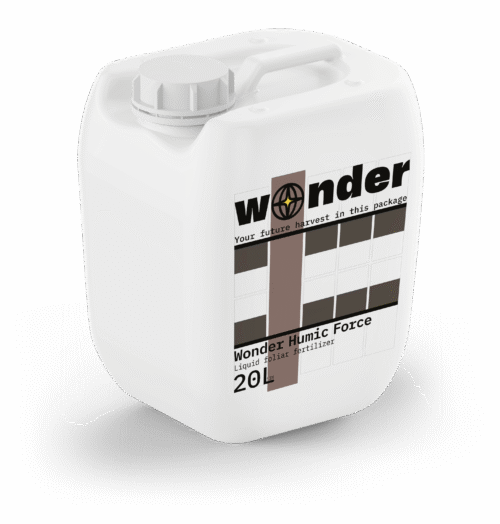
More about the product
- Form: Liquid
- Packaging: 1l, 5 l, 20 l
Organic matter
Humic acid extract
Fulvic acid extract
K₂O
Potassium oxide
Amino acids
Vegetable origin
pH
Density
(kg/l)
Your future harvest in this package!
BBCH 31-59
(Stem elongation and Budding)
(Stem elongation and Budding)
To disclose in detail this macro stage, it is necessary to indicate that here occurs the formation of second-order growth cones, the formation of the available number of flowers in the inflorescence with the laying down of flower covering organs, the formation of anthers (microsporogenesis) and stigmas (megasporogenesis), the formation of a larger number of synchronously developed productive stems. There is intensive growth of organs in length, formation of ovules and pollen grains.
Applying nitrogen and phosphorus fertilizers can increase the number of flowers in an inflorescence. Although the structural organization of the vascular plant is relatively loose, the development of different parts is well coordinated. Control depends on the movement of chemicals, including nutrients and hormones. An example of correlation is shoot and root growth. The increase in the aerial part is accompanied by an increased need for water, minerals and mechanical support, which are satisfied by the coordinated growth of the root system. Several factors seem to be involved in control, as the shoot and the root affect each other mutually. The root depends on the shoot for organic nutrients, just as the shoot depends on the root for water and inorganic nutrients, and thus the flow of ordinary nutrients must play a role. However, more specific control can be provided by supplying the nutrients needed in very small quantities.
The root depends on the shoot for certain vitamins, and changes in supply reflecting the metabolic state of the above-ground parts can also affect root growth. In addition, hormonal factors affecting cell division pass upward from the root to the stem; although the exact role of hormones has not yet been established with certainty, they may be one of the ways in which the root system can influence the activity of the shoot apex. Secondary thickening control is another important example of growth correlation. As the size of the shoot system increases, the need for both greater mechanical support and enhanced transport of water, minerals, and elements is met by increased coverage of the stem through the activity of the vascular cambium. As a rule, the cambium of trees in temperate zones is most active in spring, when buds are budding and shoots are sprouting, creating a need for nutrients.
Cell division begins on each shoot and then spreads out from it. The terminal bud stimulates the cambium to divide rapidly through the action of two groups of plant hormones: auxins and gibberellins.
Inhibition of lateral buds, another example of a correlated growth reaction, illustrates a reaction opposite to that occurring when controlling cambial activity. Lateral buds are generally depressed, as axillary shoots grow slower or do not grow at all, while the terminal bud is active. This so-called apical dominance is responsible for the characteristic unit of trunk growth observed in many conifers and herbaceous plants, such as the mallow. Weaker dominance leads to a form with multiple branching. This fact that the lateral or axillary buds become more active when the terminal bud is removed is evidence of hormonal control. The flow of auxin from the shoot apex is partially responsible for the inhibition of axillary buds.
The nutritional status of the plant also plays a role, as verticillium dominance is strong when mineral supply and light are insufficient. Since the axillary buds are released from inhibition by treatment with substances that stimulate cell division, also called cytokinins, it has been suggested that these substances are also involved in the regulation of bud’s activity.
Also in the above macro stage, the formation of all the organs of the inflorescence of the flower, development from the rudiments of already formed flowers, up to their opening, is completed. The largest upper internode continues to grow. Complex fertilizers with an emphasis on nitrogen and microelement such as zinc continue to be applied.
It is worth indicating that in terms of development, the flower can be considered as a determinate growth axis, but the lateral members occupy areas of the leaves that differentiate as floral organs, namely sepals, petals, stamens and uteri.
In the transition to flowering, the stems undergo characteristic changes, the most noticeable of which is the shape of the apical region, which is related to the type of structure to be formed, either already as a separate flower, such as in the tulip, or as a brush of flowers (inflorescence), as in the siren. The area of cell division extends to the whole apex, and the RNA content of the end cells increases. When the formation of a single flower occurs, in fact the lateral rudiments appear higher and higher on the sides of the apical dome, and the whole apex is absorbed in the described process, after which the apical growth ceases.

More about the product
- Form: Liquid
- Packaging: 1l, 5 l, 20 l
N
Total Nitrogen
P₂O₅
Phosphorus pentoxide
K₂O
Potassium oxide
MgO
Magnesium oxide
SO₃
Sulfur trioxide
Zn
Zinc chelate
B
Boron
Fe
Iron chelate
Cu
Copper chelate
Mn
Manganese chelate
Mo
Molybdenum
Amino acids
Vegetable origin
pH
Density
(kg/l)
Your future harvest in this package!

More about the product
- Form: Liquid
- Packaging: 1l, 5 l, 20 l
Mn
Manganese chelate
SO₃
Sulfur trioxide
Zn
Zink chelate
Cu
Copper сhelate
Fe
Iron chelate
Mo
Molybdenum
B
Boron
Amino acids
Vegetable origin
pH
Density
(kg/l)
Your future harvest in this package!
More about the product
- Form: Liquid
- Packaging: 1l, 5 l, 20 l
Organic matter
Humic acid extract
Fulvic acid extract
K₂O
Potassium oxide
Amino acids
Vegetable origin
pH
Density
(kg/l)
Your future harvest in this package!

More about the product
- Form: Liquid
- Packaging: 1l, 5 l, 20 l
N
Total Nitrogen
P₂O₅
Phosphorus pentoxide water soluble
K₂O
Potassium oxide
Organic acids
MgO
Magnesium oxide
Amino acids
Vegetable origin
pH
Density
(kg/l)
Your future harvest in this package!

More about the product
- Form: Liquid
- Packaging: 1l, 5 l, 20 l
B
Boron
N
Total Nitrogen
Aminoacids
Vegetable origin
pH
Density
(kg/l)
Your future harvest in this package!
BBCH 71-79
(Development of fruit)
(Development of fruit)
In this macro stage, the growth and formation of the fruit and seeds occurs. It should be noted that the embryo and endosperm increase in size.
The size of the fruit and seeds and their length are typical of the variety and hybrid. It should be noted that it is possible to influence the mass and quality of the fruit and seeds by complex fertilizers, calcium and trace elements. The fruit is formed from the ovary of the pistil after fertilization and is a characteristic feature of a flowering plant. A sharp increase in ovary cell division is observed immediately after the pollination process. Then comes a phase such as cell stretching. The nature of growth is closely related to the type of fetus.
After pollination, cell division continues for some time. After pollination, cell division continues for some time. The fertilized egg, the endosperm and the developing seeds have a strong controlling influence on fruit growth. For example, underdeveloped seeds, for certain specific reasons, are a factor in premature fruit drop. If the seed development is not uniform, the consequence can be a deformed fruit.

More about the product
- Form: Liquid
- Packaging: 20 l
N
Total Nitrogen
P₂O₅
Phosphorus pentoxide
K₂O
Potassium oxide
MgO
Magnesium oxide
SO₃
Sulfur trioxide
B
Boron
Zn
Zinc chelate
Fe
Iron chelate
Cu
Copper chelate
Mn
Manganese chelate
Mo
Molybdenum
Amino acids
Vegetable origin
pH
Density
(kg/l)
Your future harvest in this package!

More about the product
- Form: Crystalline water soluble
- Packaging: 20 kg, 25 kg
CaO
Calcium oxide
N
Nitrate Nitrogen
Amino acids
Vegetable origin
B
Boron
MgO
Magnesium Oxide
Zn
Zinc
Mn
Manganese
Cu
Copper
Organic acids
Monosaccharides
Your future harvest in this package!

More about the product
- Form: Liquid
- Packaging: 1l, 5 l, 20 l
Organic matter
Humic acid extract
Fulvic acid extract
K₂O
Potassium
P₂O₅
Phosphorus
N
Nitrogen
Amino acids
Vegetable origin
pH
Density
(kg/l)
Your future harvest in this package!

More about the product
- Form: Liquid
- Packaging: 1l, 5 l, 20 l
K₂O
Potassium
Organic acids
Amino acids
Vegetable origin
pH
Density
(kg/l)
Your future harvest in this package!
More about the product
- Form: Liquid
- Packaging: 1l, 5 l, 20 l
Mn
Manganese chelate
SO₃
Sulfur trioxide
Zn
Zink chelate
Cu
Copper сhelate
Fe
Iron chelate
Mo
Molybdenum
B
Boron
Amino acids
Vegetable origin
pH
Density
(kg/l)
Your future harvest in this package!
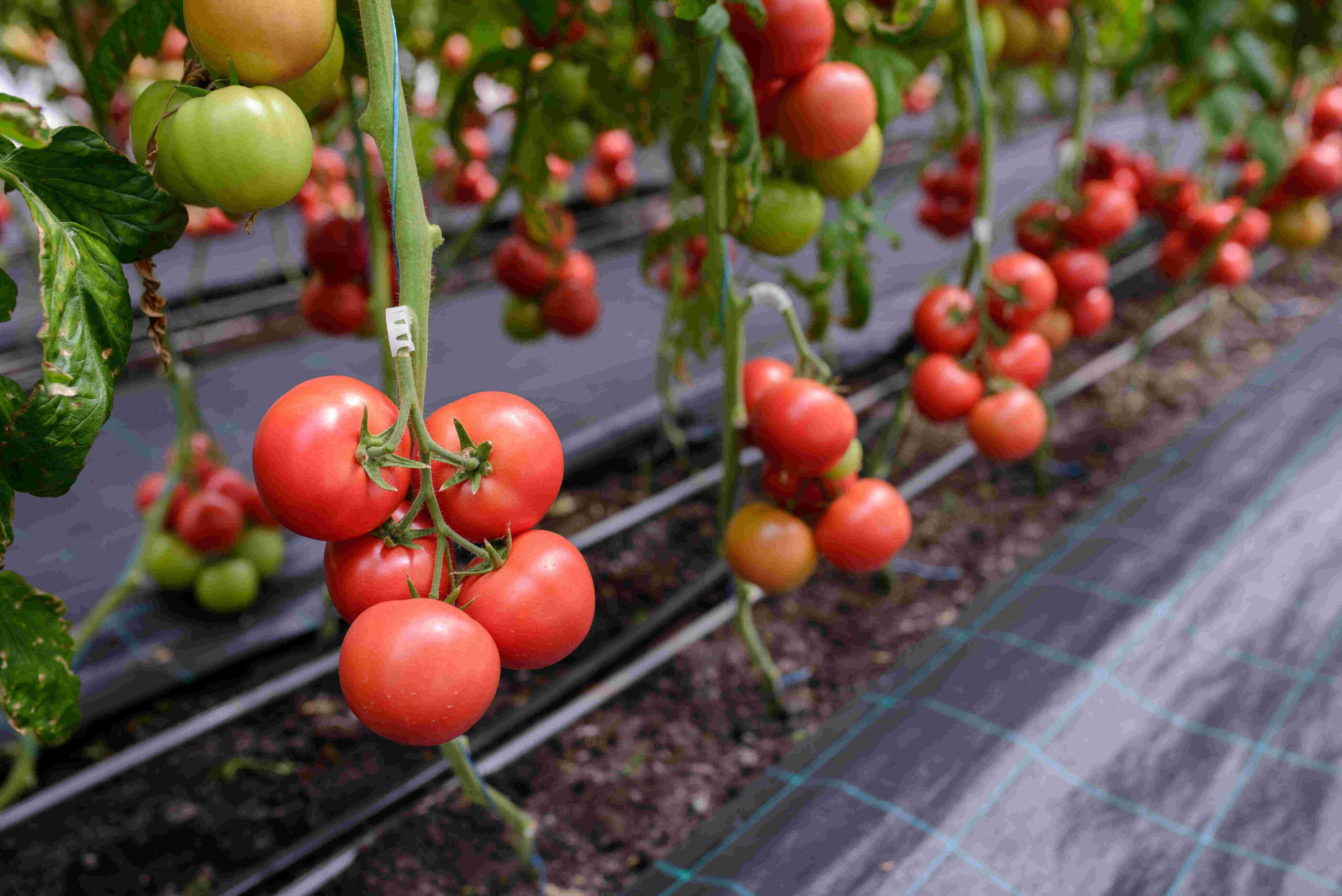

Tomato, also known as Solanum lycopersicum, is a flowering plant species belonging to the genus Solanum within the Solanaceae family. Typically grown as an annual (perennial in tropical regions), this herbaceous or semi-woody plant can reach heights of 40 to 120 cm (16 to 48 inches). Its leaves are typically odd-pinnately compound, with oblong-ovate leaflets. The flowers are bisexual, small, yellow, and borne on long stalks, arranged in cymes. The fruit is a large, spherical or oblong, juicy, fleshy, two- or multi-chambered berry.
Tomatoes are widely believed to have originated in South America. They were first cultivated by the Aztecs in Mexico around 7,000 years ago. Early tomatoes were quite different from those we know today, being small and yellowish in color.
Worldwide tomato production exceeds 180 million tonnes annually. Leading producers include China, India, the United States, Turkey, and Italy. Among the world’s most popular tomato varieties are: Beefsteak: Large, meaty tomatoes, ideal for juicing, Roma: These vibrant red tomatoes are primarily used for sauces and pastes, Cherry: Small, sweet tomatoes perfect for snacking and garnishes, Grape: Resembling grapes, these tomatoes are high in sugar and excellent for snacking and salads.
Tomatoes are heat- and light-loving plants. The optimal temperature range for their growth and development is between 23 and 25°C (73 and 77°F). It’s crucial to note that at temperatures below 15°C (59°F), flowering ceases, and at 10°C (50°F), growth stops altogether. Tomatoes will not survive frost. Tomatoes are best grown in loose, fertile, well-drained soils with a neutral pH. They require moderate watering, while high soil and air humidity can promote fungal and bacterial diseases.
Tomatoes are heavy feeders, with yields per hectare ranging from 20 to 100 tonnes. During the early stages of plant growth and development, specifically in the BBCH 13-19 phase (leaf development), tomatoes have the highest phosphorus requirement. This period often coincides with sudden temperature fluctuations in temperate climates. Anthocyanin coloration (a shift from blue to purple hues) on the leaves is a common occurrence. The recommendation from expert agronomists is Wonder Leaf Blue (53% phosphorus, applied at a rate of 2-4 kg/ha) and Wonder Leaf Mono P 30, containing 30% phosphorus, applied at a rate of 2 l/ha.
Tomatoes have a significant demand for micronutrients, which play crucial roles in various physiological and biochemical processes. Foliar fertilizers like Wonder Leaf Wonder Micro (1-3 l/ha) and Wonder Leaf Veg&Fruit (1.5-2 l/ha) can effectively address these micronutrient needs.
Essential micronutrients for tomatoes include iron (Fe), zinc (Zn), copper (Cu), manganese (Mn), boron (B), and molybdenum (Mo). These elements contribute to photosynthesis, respiration, protein synthesis, enzyme activity, and overall plant health. Deficiencies in these micronutrients can lead to stunted growth, impaired development, and reduced yields.
Boron nutrition is also important for tomatoes. Boron plays a particularly important role in cell division and tissue growth. During the early stages of tomato development, Wonder Leaf Pink (containing 20% boron, applied at a rate of 0.5-1 kg/ha) promotes active cell division and new tissue formation, ensuring rapid and healthy seedling growth.
In cases of environmental stress (sudden temperature drops, prolonged low temperatures, or waterlogged soil) or herbicide-induced stress, plant-derived amino acids can be applied to support plant recovery. Wonder Leaf Amino 43, with its 43% plant-derived amino acids, is recommended at a rate of 1 l/ha.
During the stem elongation stage (BBCH 31-39), tomatoes require zinc, which is essential for chlorophyll formation and photosynthesis. Wonder Leaf Mono Zn 8 (containing 8% chelated zinc) is recommended at a rate of 1-2 l/ha to ensure effective photosynthesis, energy production, and nutrient uptake for continued growth.
The budding stage (BBCH 51-59) is critical for tomato development. During this critical stage, tomatoes exhibit a heightened demand for boron and manganese, making foliar feeding a crucial practice. Boron plays a key role in reproductive organ development, ensuring normal flower bud development, preventing flower deformities, and promoting healthy flower growth. Wonder Leaf Mono B11 (containing 11% boron) and Wonder Leaf Mono B 120 (containing 9% boron) are recommended at rates of 1-2 l/ha each.
Manganese is essential for synthesizing enzymes involved in photosynthesis and respiration, providing the energy required for flower development. Wonder Leaf Mono Mn 11 (containing 11% manganese) is recommended at a rate of 1-2 l/ha.
During the fruit and seed development stage (BBCH 71-79), tomatoes require molybdenum and calcium. Molybdenum is a critical component of the enzyme nitrate reductase, which converts nitrates (NO3-) into ammonium (NH4+), the available form of nitrogen for plants. Effective nitrogen uptake is crucial for fruit development, as nitrogen is essential for protein, nucleic acid, and other biomolecule synthesis. Wonder Leaf Mono Mo 3 is recommended at a rate of 0.6-0.8 l/ha.
Calcium enhances plant resistance to various stresses, including heat stress, drought, and diseases. Wonder Leaf Mono Ca 14 (containing 14% calcium) is recommended at a rate of 4-6 l/ha to improve plant survival and health under adverse conditions, particularly during fruit formation.
Successful tomato cultivation requires a well-planned strategy that encompasses planning, field operations, and nutrient management. Selecting suitable varieties, maintaining soil health and fertility, implementing effective pest and disease control measures, and adopting advanced agricultural practices can ensure sustainable tomato production throughout the entire growing cycle.
Tomato fertilization is a critical aspect of crop management, ensuring healthy plant growth, high yields, and fruit quality. The strategic application of micronutrients at the appropriate growth stages, as outlined above, can optimize tomato productivity and profitability.
Contact us in order to receive cooperation terms and details
Partners are our customers and suppliers, whom we care about and who determine our path.