Carl Wilhelm Scheele of Sweden discovered molybdenum in 1781. He experimented with nitric acid and molybdenum ore (the process produced a white powder), which had always been thought to contain lead. Scheele proved that the element was not lead. Inspired by Scheele, in the same year, the Swede P. J. Hjelm used the “carbon reduction method” to isolate the new metal from this white powder and named the metal “molybdenum”.
-
Molybdenum is vital for the enzymes of bacteria that are able to fix nitrogen.
-
There are approximately fifty enzymes containing molybdenum, which are found in both bacteria and animals.
-
It is essential for all eukaryotes.
-
Molybdenum is the fifty-fourth most abundant element on Earth in the crust and the twenty-fifth most abundant element in the oceans.
The key functions of molybdenum in plant nutrition are therefore as follows:
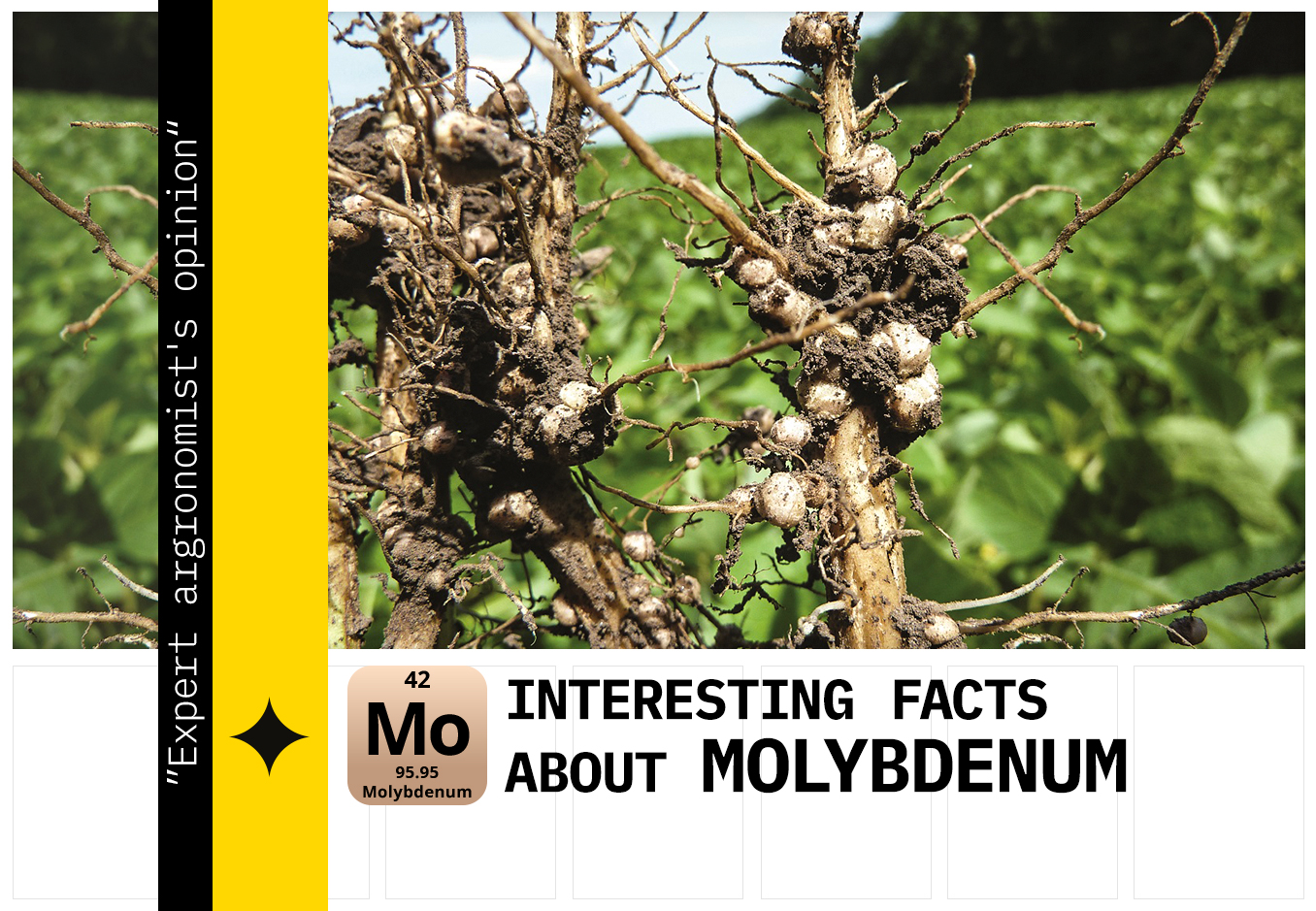
- Nitrogen fixation: Molybdenum is a key component of nitrogenase enzymes, which are required to convert atmospheric nitrogen into a form that can be used by plants (Figure 1).
- Enzymatic activity: Molybdenum-dependent enzymes are involved in various biochemical pathways that are critical for plant growth and development. For example, the enzyme nitrate reductase promotes the conversion of nitrate to nitrite, a precursor of amino acids and proteins.
- Seed formation and germination: Molybdenum plays a vital role in the synthesis of phytohormones such as abscisic acid (ABA), which regulates seed dormancy, germination, and early plant growth. Therefore, sufficient levels of molybdenum are necessary for optimal seed formation and viability.
Figure 1. The effect of molybdenum on atmospheric nitrogen fixation.
The importance of Mo for the process of biological nitrogen fixation was first described by Bortels. He demonstrated that Azotobacter vinelandii, when inoculated into a nutrient (culture) medium without N, required Mo for growth. This was not observed if the source of N in the nutrient medium was ammonium. In a medium where N was present, the bacteria did not need Mo for the synthesis of assimilates.
But did you know that molybdenum can positively affect the assimilation of phosphorus, especially under acidic soil conditions?
It is a particularly promising candidate due to its dual functionality, especially in acidic soils (Figure 2). In such soils both Mo deficiency and phosphorus fixation are common. Due to the chemical similarity between molybdate and phosphate ions, Mo addition can increase phosphorus availability by competing with soil colloids (Xu et al., 2006). In addition, Mo can stimulate the secretion of protons and phosphatases by plant roots or microorganisms. This further promotes phosphorus mobilization (Qin et al., 2023a). In field production, it has been observed that the addition of molybdenum fertilizers significantly increases the available phosphorus content in the rhizosphere of legume soil. This, in turn, enhances phosphorus uptake by crops.
What are the ways available to us to replenish this valuable element?
- Soil application: Soil analysis is crucial for assessing molybdenum levels and determining appropriate fertilization levels. The application of molybdenum-containing fertilizers or organic fertilizers such as compost can help reduce deficiencies.
- Foliar application: Foliar application of molybdenum can provide a quick and effective solution, especially at critical growth stages or when deficiency symptoms appear.
Figure 2. Map of global soil acidity
- Crop rotation and inter-row legume crops: Including legumes in crop rotation systems can increase soil fertility and molybdenum availability through nitrogen fixation.