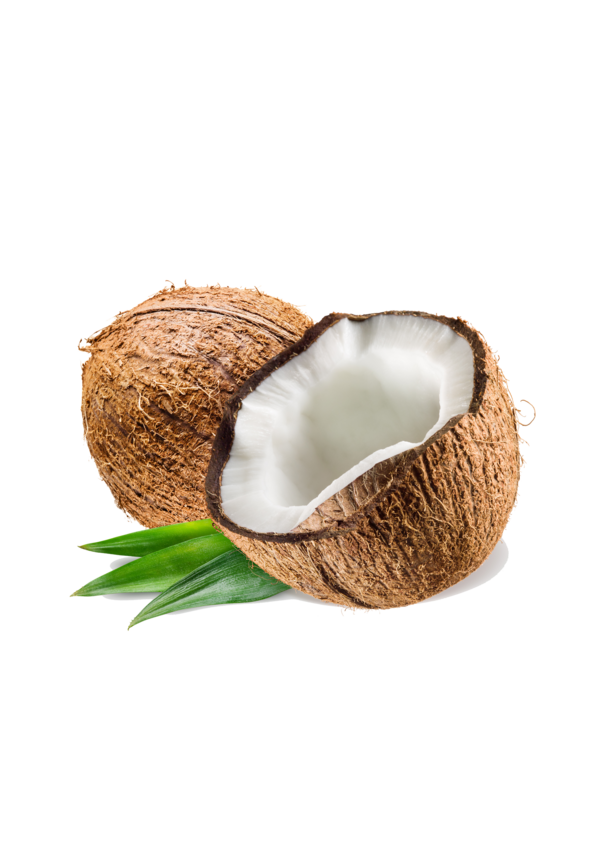
Foliar fertilizer application rates and recommendation for the coconut palm

- To exact determination and calculation the required amount of fertilizer application, it is recommended to conduct soil agrochemical analysis, taking into account the planned yield indicators
- We recommend to discuss nutritional special aspects with your regional manager
BBCH 31-39
Stem elongation
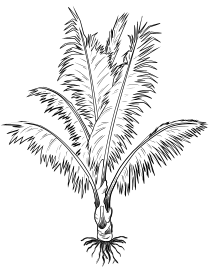
BBCH 51-59
Inflorescence emergence
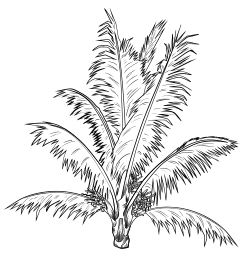
BBCH 67-69
End of flowering, ovary formation
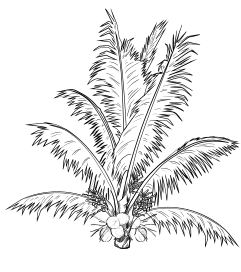
BBCH 71-79
Development of fruit
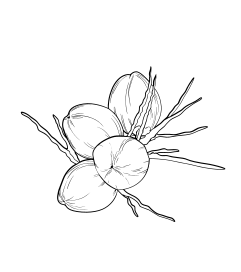
After harvest
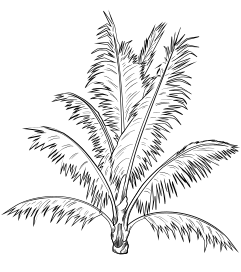
BBCH 31-39
Stem elongation
Stem elongation
To disclose in detail this macro stage, it is necessary to indicate that here occurs the formation of second-order growth cones, the formation of the available number of flowers in the inflorescence with the laying down of flower covering organs, the formation of anthers (microsporogenesis) and stigmas (megasporogenesis), the formation of a larger number of synchronously developed productive stems. There is intensive growth of organs in length, formation of ovules and pollen grains.
Applying nitrogen and phosphorus fertilizers can increase the number of flowers in an inflorescence. Although the structural organization of the vascular plant is relatively loose, the development of different parts is well coordinated. Control depends on the movement of chemicals, including nutrients and hormones. An example of correlation is shoot and root growth. The increase in the aerial part is accompanied by an increased need for water, minerals and mechanical support, which are satisfied by the coordinated growth of the root system. Several factors seem to be involved in control, as the shoot and the root affect each other mutually.
The root depends on the shoot for organic nutrients, just as the shoot depends on the root for water and inorganic nutrients, and thus the flow of ordinary nutrients must play a role. However, more specific control can be provided by supplying the nutrients needed in very small quantities. The root depends on the shoot for certain vitamins, and changes in supply reflecting the metabolic state of the above-ground parts can also affect root growth. In addition, hormonal factors affecting cell division pass upward from the root to the stem; although the exact role of hormones has not yet been established with certainty, they may be one of the ways in which the root system can influence the activity of the shoot apex. Secondary thickening control is another important example of growth correlation. As the size of the shoot system increases, the need for both greater mechanical support and enhanced transport of water, minerals, and elements is met by increased coverage of the stem through the activity of the vascular cambium. As a rule, the cambium of trees in temperate zones is most active in spring, when buds are budding and shoots are sprouting, creating a need for nutrients.
Cell division begins on each shoot and then spreads out from it. The terminal bud stimulates the cambium to divide rapidly through the action of two groups of plant hormones: auxins and gibberellins. Inhibition of lateral buds, another example of a correlated growth reaction, illustrates a reaction opposite to that occurring when controlling cambial activity. Lateral buds are generally depressed, as axillary shoots grow slower or do not grow at all, while the terminal bud is active. This so-called apical dominance is responsible for the characteristic unit of trunk growth observed in many conifers and herbaceous plants, such as the mallow. Weaker dominance leads to a form with multiple branching. This fact that the lateral or axillary buds become more active when the terminal bud is removed is evidence of hormonal control.
The flow of auxin from the shoot apex is partially responsible for the inhibition of axillary buds. The nutritional status of the plant also plays a role, as verticillium dominance is strong when mineral supply and light are insufficient. Since the axillary buds are released from inhibition by treatment with substances that stimulate cell division, also called cytokinins, it has been suggested that these substances are also involved in the regulation of bud’s activity.

More about the product
- Form: Liquid
- Packaging: 1l, 5 l, 20 l, 1000 l
Zn
Zinc chelate
N
Total Nitrogen
SO₃
Sulfur trioxide
Amino acids
Vegetable origin
Organic acids
pH
Density
(kg/l)
Your future harvest in this package!

More about the product
- Form: Liquid
- Packaging: 1l, 5 l, 20 l, 1000 l
Cu
Сopper chelate
N
Total Nitrogen
SO₃
Sulfur trioxide
Amino acids
Vegetable origin
Organic acids
pH
Density
(kg/l)
Your future harvest in this package!

More about the product
- Form: Liquid
- Packaging: 1l, 5 l, 20 l, 1000 l
Fe
Iron chelate (EDTA)
N
Total Nitrogen
SO₃
Sulfur trioxide
pH
Density
(kg/l)
Your future harvest in this package!

More about the product
- Form: Liquid
- Packaging: 20 l
N
Total Nitrogen
P₂O₅
Phosphorus pentoxide
K₂O
Potassium oxide
MgO
Magnesium oxide
SO₃
Sulfur trioxide
Zn
Zinc chelate
B
Boron
Fe
Iron chelate
Cu
Copper chelate
Mn
Manganese chelate
Mo
Molybdenum
Amino acids
Vegetable origin
pH
Density
(kg/l)
Your future harvest in this package!

More about the product
- Form: Liquid
- Packaging: 1l, 5 l, 20 l, 1000 l
Organic matter
Humic acid extract
Fulvic acid extract
K₂O
Potassium
P₂O₅
Phosphorus
N
Nitrogen
Amino acids
Vegetable origin
pH
Density
(kg/l)
Your future harvest in this package!
BBCH 51-59
Inflorescence emergence
Inflorescence emergence
In this macro stage, the processes of formation of all the organs of the flower inflorescence are completed, the development from the rudiments of the flowers to their opening takes place. The largest upper internode continues to grow.
Application of complex fertilizers with an emphasis on nitrogen and trace elements – zinc.
From the point of view of development, a flower can be considered as the axis of a shoot of deterministic growth, with the lateral members occupying areas of leaves that differentiate as floral organs — sepals, petals, stamens, and pistils. In transition to flowering, the stem apex undergoes characteristic changes, the most noticeable of which is the shape of the apical region, which is related to the type of structure to be formed, whether it is a single flower, as in a tulip, or a cluster of flowers (inflorescence), as in a lilac. The area of cell division extends to the entire tip, and the RNA content of the terminal cells increases. As a single flower forms, lateral primordia appear higher and higher on the sides of the apical dome, and the entire apex is absorbed in the process, after which apical growth ceases.

More about the product
- Form: Crystalline water soluble
- Packaging: 20 kg
B
Boron
Your future harvest in this package!
More about the product
- Form: Liquid
- Packaging: 20 l
N
Total Nitrogen
P₂O₅
Phosphorus pentoxide
K₂O
Potassium oxide
MgO
Magnesium oxide
SO₃
Sulfur trioxide
Zn
Zinc chelate
B
Boron
Fe
Iron chelate
Cu
Copper chelate
Mn
Manganese chelate
Mo
Molybdenum
Amino acids
Vegetable origin
pH
Density
(kg/l)
Your future harvest in this package!

More about the product
- Form: Liquid
- Packaging: 1l, 5 l, 20 l, 1000 l
B
Boron
N
Total Nitrogen
Aminoacids
Vegetable origin
pH
Density
(kg/l)
Your future harvest in this package!

More about the product
- Form: Crystalline water soluble
- Packaging: 25 kg
N
Total Nitrogen
P₂O₅
Phosphorus pentoxide
K₂O
Potassium oxide
SO₃
Sulfur trioxide
Mo
Molybdenum
Your future harvest in this package!

More about the product
- Form: Liquid
- Packaging: 1l, 5 l, 20 l, 1000 l
Organic matter
Humic acid extract
Fulvic acid extract
K₂O
Potassium oxide
Amino acids
Vegetable origin
pH
Density
(kg/l)
Your future harvest in this package!
BBCH 67-69
End of flowering, ovary formation
End of flowering, ovary formation
In this macro stage, the growth and formation of the fruit and seeds occurs. It should be noted that the embryo and endosperm increase in size.
The size of the fruit and seeds and their length are typical of the variety and hybrid. It should be noted that it is possible to influence the mass and quality of the fruit and seeds by complex fertilizers, calcium and trace elements. The fruit is formed from the ovary of the pistil after fertilization and is a characteristic feature of a flowering plant. A sharp increase in ovary cell division is observed immediately after the pollination process. Then comes a phase such as cell stretching. The nature of growth is closely related to the type of fetus. After pollination, cell division continues for some time. After pollination, cell division continues for some time.
The fertilized egg, the endosperm and the developing seeds have a strong controlling influence on fruit growth. For example, underdeveloped seeds, for certain specific reasons, are a factor in premature fruit drop. If the seed development is not uniform, the consequence can be a deformed fruit.

More about the product
- Form: Liquid
- Packaging: 1l, 5 l, 20 l, 1000 l
Mn
Manganese chelate
SO₃
Sulfur trioxide
Zn
Zink chelate
Cu
Copper сhelate
Fe
Iron chelate
Mo
Molybdenum
B
Boron
Amino acids
Vegetable origin
pH
Density
(kg/l)
Your future harvest in this package!

More about the product
- Form: Liquid
- Packaging: 1l, 5 l, 20 l, 1000 l
N
Total Nitrogen
MgO
Magnesium oxide
SO₃
Sulfur trioxide
B
Boron
Cu
Copper сhelate
Zn
Zink chelate
Fe
Iron chelat
Mn
Manganese chelate
Amino acids
Vegetable origin
Organic acids
pH
Density
(kg/l)
Your future harvest in this package!

More about the product
- Form: Crystalline water soluble
- Packaging: 25 kg
N
Total Nitrogen
P₂O₅
Phosphorus pentoxide
K₂O
Potassium oxide
Cu
Сopper chelate (EDTA)
Mn
Manganese chelate (EDTA)
Zn
Zinc chelate (EDTA)
Your future harvest in this package!

More about the product
- Form: Crystalline water soluble
- Packaging: 25 kg
P₂O₅
Phosphorus pentoxide
K₂O
Potassium oxide
SO₃
Sulfur trioxide
B
Boron
Zn
Zinc
Cu
Сopper
Mo
Molybdenum
Fe
Iron
Mn
Manganese
Amino acids
Vegetable origin
Your future harvest in this package!
More about the product
- Form: Crystalline water soluble
- Packaging: 25 kg
N
Total Nitrogen
P₂O₅
Phosphorus pentoxide
K₂O
Potassium oxide
SO₃
Sulfur trioxide
Mo
Molybdenum
Your future harvest in this package!
BBCH 71-79
Development of fruit
Development of fruit
In this macro stage, the growth and formation of the fruit and seeds occurs. It should be noted that the embryo and endosperm increase in size.
The size of the fruit and seeds and their length are typical of the variety and hybrid. It should be noted that it is possible to influence the mass and quality of the fruit and seeds by complex fertilizers, calcium and trace elements. The fruit is formed from the ovary of the pistil after fertilization and is a characteristic feature of a flowering plant. A sharp increase in ovary cell division is observed immediately after the pollination process. Then comes a phase such as cell stretching. The nature of growth is closely related to the type of fetus. After pollination, cell division continues for some time. After pollination, cell division continues for some time.
The fertilized egg, the endosperm and the developing seeds have a strong controlling influence on fruit growth. For example, underdeveloped seeds, for certain specific reasons, are a factor in premature fruit drop. If the seed development is not uniform, the consequence can be a deformed fruit.
More about the product
- Form: Liquid
- Packaging: 1l, 5 l, 20 l, 1000 l
Mn
Manganese chelate
SO₃
Sulfur trioxide
Zn
Zink chelate
Cu
Copper сhelate
Fe
Iron chelate
Mo
Molybdenum
B
Boron
Amino acids
Vegetable origin
pH
Density
(kg/l)
Your future harvest in this package!

More about the product
- Form:
- Packaging: 1l, 5 l, 20 l, 1000 l
P₂O₅
Phosphorus pentoxide
N
Total Nitrogen
B
Boron
Zn
Zinc chelate
Amino acids
Vegetable origin
Organic acids
pH
Density
(kg/l)
Your future harvest in this package!
More about the product
- Form: Liquid
- Packaging: 1l, 5 l, 20 l, 1000 l
N
Total Nitrogen
MgO
Magnesium oxide
SO₃
Sulfur trioxide
B
Boron
Cu
Copper сhelate
Zn
Zink chelate
Fe
Iron chelat
Mn
Manganese chelate
Amino acids
Vegetable origin
Organic acids
pH
Density
(kg/l)
Your future harvest in this package!

More about the product
- Form: Liquid
- Packaging: 1l, 5 l, 20 l, 1000 l
CaO
Calcium oxide
N
Total Nitrogen
MgO
Magnesium oxide
pH
Density
(kg/l)
Your future harvest in this package!

More about the product
- Form: Liquid
- Packaging: 20 l
N
Total Nitrogen
P₂O₅
Phosphorus pentoxide
K₂O
Potassium oxide
MgO
Magnesium oxide
SO₃
Sulfur trioxide
B
Boron
Zn
Zinc chelate
Fe
Iron chelate
Cu
Copper chelate
Mn
Manganese chelate
Mo
Molybdenum
Amino acids
Vegetable origin
pH
Density
(kg/l)
Your future harvest in this package!
After harvest
In this macro stage, the transformation of plastic substances into spare ones occurs. Also at this stage, the germination of seeds is formed.
The death of cells, organs, or individual plants looks programmed and, in a sense, adaptive. Obviously, this refers to the death of individual cells during differentiation, when the residual products contribute to the effective function of the entire plant organism.
The death of leaves and shoot systems is part of the adaptation of the plant to the cycle of the seasons. It is worth noting that in annual species, the death of the entire plant can be considered in a similar way. The sequence of generations in this case is done by seeds. The mother plant can actually contribute to the success of the seedling by providing the seeds with reserves obtained as a result of the decay of parental tissues.
Certain signs characterize the onset of aging. In cells, degenerative changes are observed, often associated with the accumulation of decay products. Certain signs characterize the onset of aging. In cells, degenerative changes are observed, often associated with the accumulation of decay products. Metabolic configurations accompany degeneration. Breathing may increase for a time, but the rate eventually decreases as the cellular apparatus degenerates. Protein and nucleic acid synthesis ceases, and in some cases cell decay is attributed to the release of enzymes due to the destruction of membrane-associated bodies called lysosomes.
Individual cell death in tissues such as the xylem seems to be determined by internal factors, but aging often depends on tissue-organ interactions. The presence of developing young leaves often accelerates the aging of old leaves; removal of young leaves slows the aging of old leaves, indicating control through competition for nutrients.
A similar effect is observed in annual plants, in which developing fruits and seeds are associated with aging and, ultimately, death of the rest of the plant; removal of reproductive structures slows the rate of aging. In these cases, competition obviously has some effect, but it does not sufficiently explain why older, mature bodies suffer in competition with still actively developing ones.
More about the product
- Form:
- Packaging: 1l, 5 l, 20 l, 1000 l
P₂O₅
Phosphorus pentoxide
N
Total Nitrogen
B
Boron
Zn
Zinc chelate
Amino acids
Vegetable origin
Organic acids
pH
Density
(kg/l)
Your future harvest in this package!
More about the product
- Form: Liquid
- Packaging: 1l, 5 l, 20 l, 1000 l
Cu
Сopper chelate
N
Total Nitrogen
SO₃
Sulfur trioxide
Amino acids
Vegetable origin
Organic acids
pH
Density
(kg/l)
Your future harvest in this package!
More about the product
- Form: Liquid
- Packaging: 1l, 5 l, 20 l, 1000 l
Fe
Iron chelate (EDTA)
N
Total Nitrogen
SO₃
Sulfur trioxide
pH
Density
(kg/l)
Your future harvest in this package!
More about the product
- Form: Crystalline water soluble
- Packaging: 20 kg
B
Boron
Your future harvest in this package!
More about the product
- Form: Liquid
- Packaging: 1l, 5 l, 20 l, 1000 l
Organic matter
Humic acid extract
Fulvic acid extract
K₂O
Potassium
P₂O₅
Phosphorus
N
Nitrogen
Amino acids
Vegetable origin
pH
Density
(kg/l)
Your future harvest in this package!
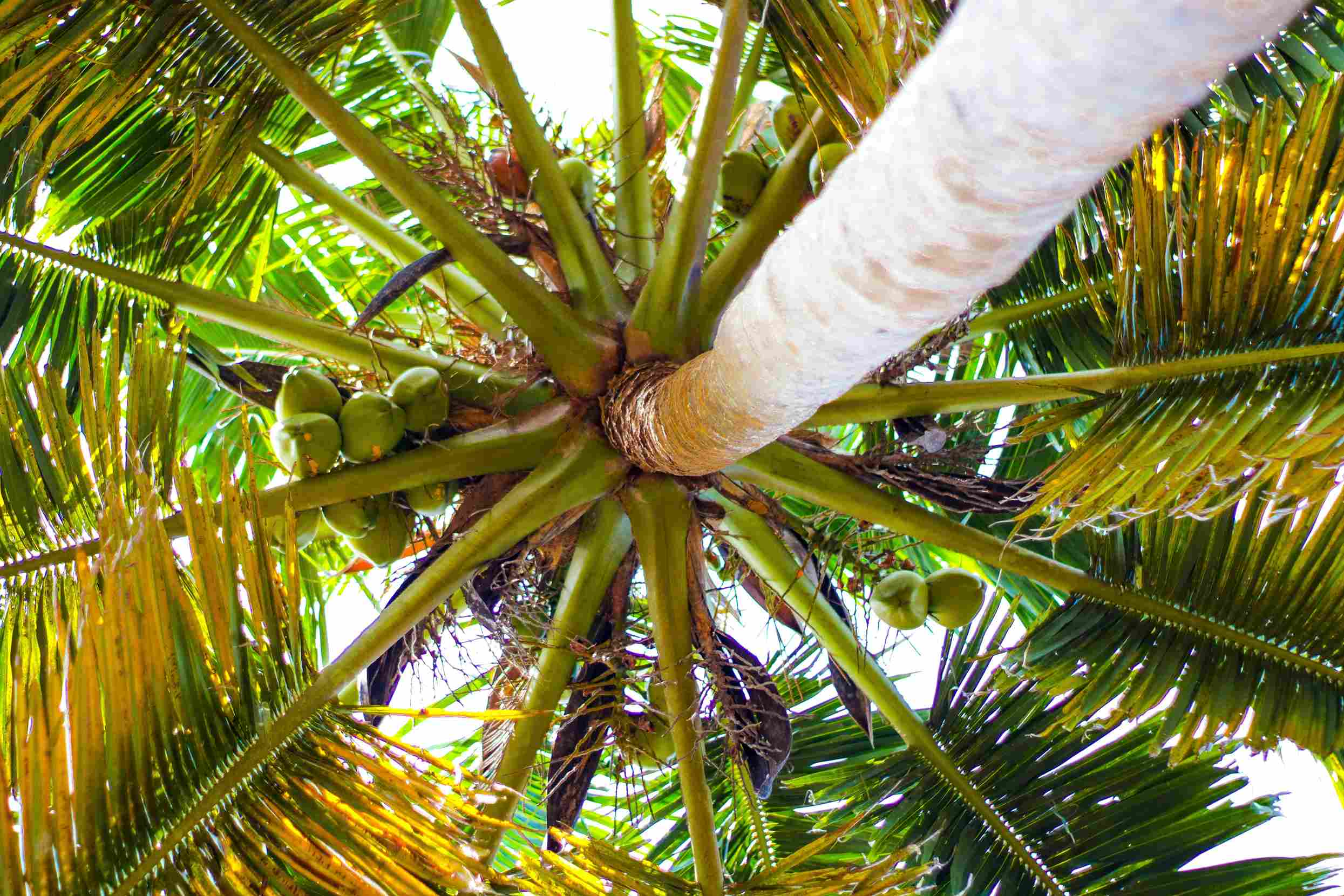
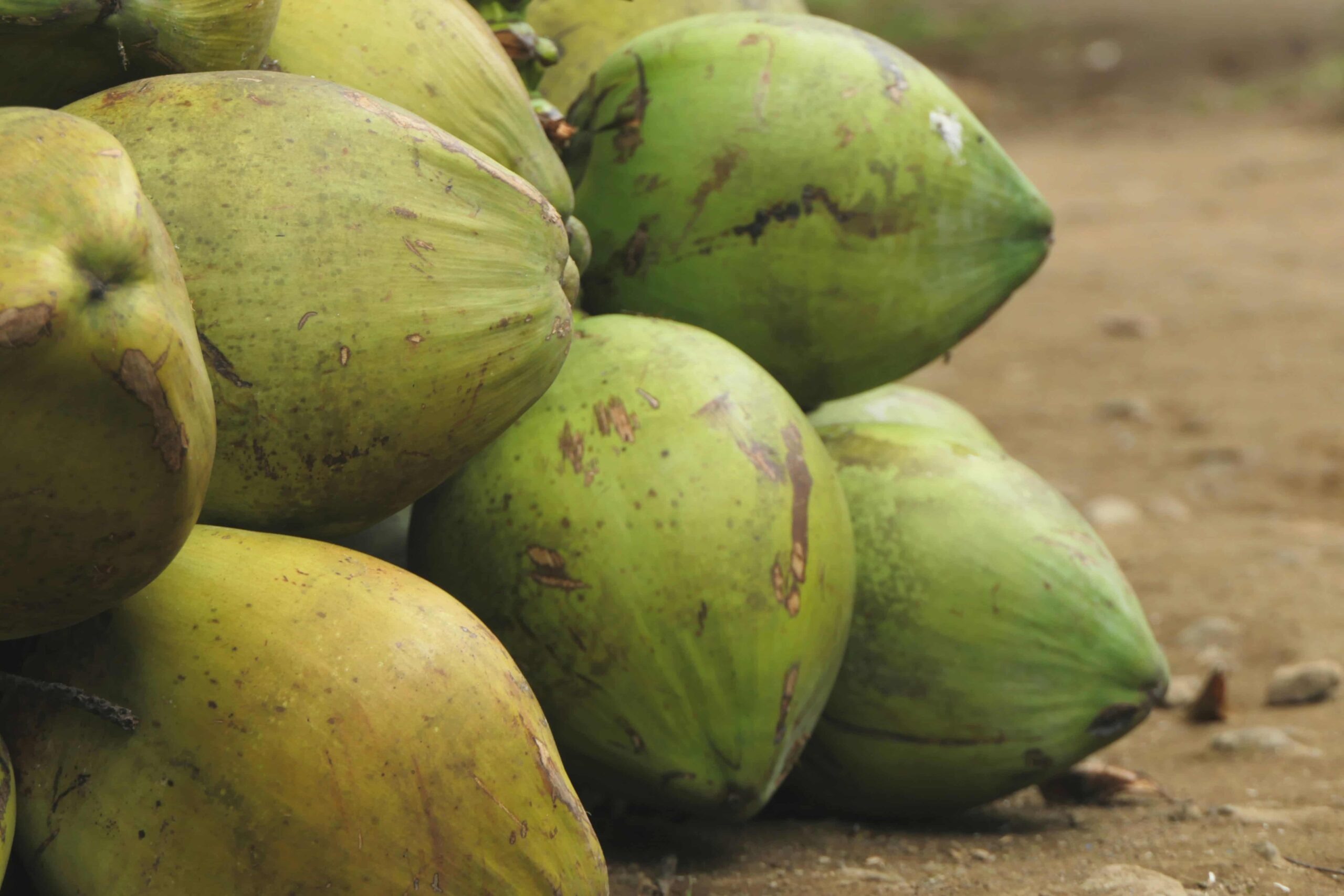
The coconut palm –
(Cocos nucifera) is a versatile fruit-bearing tree belonging to the Arecaceae family, the sole member of the genus Cocos. This majestic palm can reach impressive heights of up to 30 meters. With a slender trunk ranging from 15 to 45 centimeters in diameter. The coconut palm’s fruit, aptly named the coconut, typically measures between 15 and 30 centimeters in length and weighs approximately 1.5 to 2.5 kilograms. The coconut palm traces its roots to the tropical and subtropical regions of Southeast Asia, particularly Malaysia, and Oceania. This coastal plant thrives in sandy soils, often gracing coastal coral strips, atolls, and areas where other vegetation struggles to survive.
The global coconut production stands at around 61 million tons annually.
The Philippines, Indonesia, India, Sri Lanka, and Thailand are the leading coconut producers.
The coconut palm flourishes best in tropical environments with average annual temperatures. Ranging from 27°C to 32°C and annual rainfall between 1500 and 2500 millimeters. It requires well-drained soil with a pH between 5.0 and 8.0 and high air humidity (70-80%). Coconut palms thrive in coastal areas due to their tolerance for saline soil and wind exposure. The soil should be well-drained, light, and sandy to prevent waterlogging. Coconut palms also adapt well to sandy or deep sandy soils that provide good drainage.
Coconut palms benefit significantly from foliar fertilization,
a technique that involves applying nutrients directly to the leaves. This method allows for rapid nutrient uptake, enabling the plant to respond promptly to nutrient deficiencies compared to traditional root fertilization.
During the initial growth stages of coconut palms, falling within the BBCH 31-39 (Stem Elongation) phase, ensuring the supply of essential nutrients is crucial for optimal growth and development. Nitrogen (N) stands as the most critical element during this stage. As a constituent of plant cells and chlorophyll, N plays a pivotal role in driving rapid growth and plant development.
Therefore, we recommend using foliar fertilizers for coconut palms, such as Wonder Leaf Grass (10:5:3) at an application rate of 4-5 liters per hectare. This NPK fertilizer provides a balanced supply of nutrients. With a focus on nitrogen to support vigorous stem elongation and leaf growth. Additionally, it is important to apply fertilizers containing zinc. As zinc helps plants cope with various stressful conditions like excessive moisture or drought, which may occur in coconut plantations. We recommend using Wonder Leaf Mono Zn 8, which contains 8% chelated zinc, at an application rate of 1-2 liters per hectare.
Copper (Cu) and iron (Fe) are essential micronutrients that play pivotal roles in maintaining optimal coconut palm health and productivity. These micronutrients are involved in various enzymatic processes and physiological functions within the plant, including photosynthesis and respiration. Deficiencies in copper and iron can lead to severe consequences for coconut palms, including leaf drying, yellowing, and reduced yield.
To ensure adequate iron supply for your coconut palms,
we recommend incorporating Wonder Leaf Mono Fe 10 into your foliar fertilization program. This concentrated iron fertilizer contains 8.8% chelated iron, making it readily available for efficient nutrient uptake by the plant. Apply Wonder Leaf Mono Fe 10 at a rate of 0.5-1 liters per hectare to effectively address iron deficiencies and promote healthy coconut palm growth.
For optimal copper nutrition in your coconut palms, we suggest using Wonder Leaf Mono Cu 6. This copper fertilizer contains 6% chelated copper, ensuring a targeted boost of this essential micronutrient. Apply Wonder Leaf Mono Cu 6 at a rate of 1-2 liters per hectare to prevent copper deficiencies and maintain overall coconut palm health.
Foliar feeding of coconut palms typically involves sprayers that evenly distribute the copper and iron solution on the leaves. We recommend combining it with the spreader-sticker Wonder Aqua True Cover. An adjuvant with a water-lipid base that helps the solution absorb more effectively and stay on the leaf surface longer. It is important to perform treatments in the morning or evening to avoid rapid evaporation of the solution due to sunlight.
Humic acids play a crucial role in improving soil structure and nutrient availability,
making essential elements more accessible to coconut palms. Their ability to chelate nutrients and form complexes with micronutrients facilitates efficient nutrient uptake by the plant.
Nitrogen (N), phosphorus (P), and potassium (K) are the fundamental macronutrients that drive healthy coconut palm growth and development. Together, they create optimal conditions for healthy growth and fruiting.
Wonder Humic NPK combines the benefits of humic acids with the essential macronutrients NPK, providing a comprehensive solution for optimal coconut palm nutrition. This unique fertilizer contains 15% organic matter, including 10% humic acid extract and 5% fulvic acid extract. Additionally, it is enriched with potassium, phosphorus, nitrogen, and plant-derived amino acids. The application rate for foliar feeding is 150-300 ml/ha, and for soil feeding, it is 5-10 liters/ha.
During the crucial flowering stage of a coconut palm. Which falls within the BBCH 51-59 phase, ensuring adequate boron supply is critical. This essential micronutrient plays a vital role in pollen germination, pollen tube development, fruit set, and overall palm growth. We recommend using Wonder Leaf Pink (20% boron, application rate of 0.5-1 kg/ha), Wonder Leaf Mono B 11 (11% boron, application rate of 1-2 liters/ha), and Wonder Leaf Mono B 120 (9% boron, application rate of 1-2 liters/ha).
As coconut palms transition into the BBCH 67-69 phase (End of Flowering, Ovary Visible). Their nutritional requirements shift towards a balanced supply of NPK (nitrogen, phosphorus, and potassium). Nitrogen promotes green growth and leaf development, phosphorus is involved in root and fruit formation, and potassium strengthens stems and improves fruit quality. We recommend using Wonder Leaf Yellow (21:21:21, application rate of 2-4 kg/ha), Wonder Leaf Macro (10:10:10, application rate of 4-5 liters/ha), and Wonder Leaf Violet (30:10:10, recommended dose of 2-4 kg/ha).
At this stage, fertilizers with amino acids are also quite important.
They help in better fruit formation and quality. Amino acids, the building blocks of proteins, play a vital role in plant growth and metabolism. Therefore, we advise using foliar fertilizers for coconut palms such as Wonder Leaf Green. It containing 15% plant-derived amino acids, with an application rate of 0.5-1 kg/ha, and Wonder Leaf Amino 43, this concentrated amino acid fertilizer provides a high dose of amino acids (43%), with an application rate of 0.5-1 l/ha.
As coconut palms progress into the fruit and seed development stage (BBCH 71-79). Ensuring an adequate supply of potassium becomes paramount. This element is the most crucial nutrient for coconut palms and plays a significant role in physiological processes. Potassium is necessary for the formation of sugar, fat, and fibrous material. We recommend using Wonder Leaf Mono K 30, which contains 30% potassium, at an application rate of 1-2 liters per hectare, and Wonder Leaf Blossom, which contains 7% potassium, at an application rate of 4-5 liters per hectare.
Calcium plays a crucial role in strengthening cell walls. Improving membrane permeability, and regulating enzymatic activity. All of which contribute to enhanced stress tolerance and disease resistance in coconut palms. Calcium strengthens cell walls and enhances the plant’s defense mechanisms. Providing physical and chemical barriers against pathogens and environmental stress factors. The best option is to fertilize coconut palms with Wonder Leaf Ca 14 at a rate of 1-2 liters per hectare and Wonder Leaf CaO+B at a rate of 1-2 kg per hectare.
Following harvest, coconut palms have a heightened need for phosphorus.
This essential nutrient plays a critical role in stimulating root system development, increasing disease resistance, and promoting better fruiting in the next cycle. We recommend using Wonder Leaf Mono P 30, which contains 30% phosphorus, at a recommended rate of 1-2 liters per hectare.
In conclusion, adopting a tailored nutrient management strategy that considers the specific needs of coconut palms at each growth stage is essential for optimizing fruit and seed development.
The cultivation of coconut palms demands meticulous attention to detail, adherence to optimal growing conditions, and a commitment to nurturing these valuable plants. As the demand for coconut products continues to rise, the coconut industry presents exciting opportunities for growth and sustainability.
Contact us in order to receive cooperation terms and details
Partners are our customers and suppliers, whom we care about and who determine our path.