


Foliar fertilizer application rates and recommendation for the peanut

- To exact determination and calculation the required amount of fertilizer application, it is recommended to conduct soil agrochemical analysis, taking into account the planned yield indicators
- We recommend to discuss nutritional special aspects with your regional manager
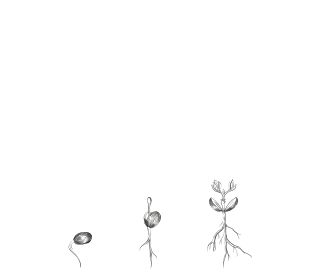
BBCH stages 13-19
Leaf Development
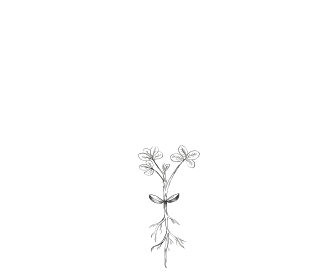
BBCH 21-29
Branching shoots formation
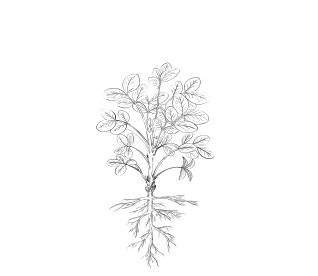
BBCH 31-39
Elongation stage
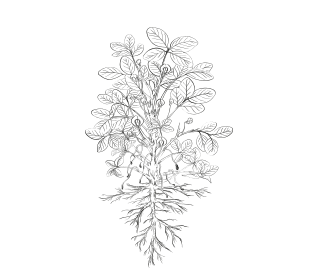
BBCH 51-59
Inflorescence emergence
BBCH 71-79
Development of fruit
BBCH stages 13-19
Leaf Development
Leaf Development
This macro stage develops from the first true leaf and continues up to nine or more true leaves. First, the rudimentary stem nodes and internodes are established. The plant needs sufficient supplies of macronutrients such as phosphorus and potassium. When exposed to environmental and anthropogenic influences, amino acids are needed to eliminate them.
Leaves originate on the sides of the shoot tip. A local concentration of cell divisions marks the very beginning of the leaf; these cells then enlarge to form a nipple-shaped structure called a leaf support. The cells of the leaf support can be derived from the sheath or from the sheath and the hull. The support then becomes more and more flattened in the transverse plane due to laterally oriented cell divisions and subsequent expansion on both sides.

More about the product
- Form:
- Packaging: 1l, 5 l, 20 l, 1000 l
P₂O₅
Phosphorus pentoxide
N
Total Nitrogen
B
Boron
Zn
Zinc chelate
Amino acids
Vegetable origin
Organic acids
pH
Density
(kg/l)
Your future harvest in this package!

More about the product
- Form: Liquid
- Packaging: 1l, 5 l, 20 l, 1000 l
Amino acids
Vegetable origin
N
Organic nitrogen
pH
Density
(kg/l)
Your future harvest in this package!

More about the product
- Form: Crystalline water soluble
- Packaging: 25 kg
N
Total Nitrogen
P₂O₅
Phosphorus pentoxide
K₂O
Potassium oxide
Zn
Zinc chelate (Zn EDTA)
Your future harvest in this package!

More about the product
- Form: Crystalline water soluble
- Packaging: 20 kg
B
Boron
Your future harvest in this package!

More about the product
- Form: Crystalline water soluble
- Packaging: 25 kg
P₂O₅
Phosphorus pentoxide
K₂O
Potassium oxide
SO₃
Sulfur trioxide
B
Boron
Zn
Zinc
Cu
Сopper
Mo
Molybdenum
Fe
Iron
Mn
Manganese
Amino acids
Vegetable origin
Your future harvest in this package!
BBCH 21-29
Branching shoots formation
Branching shoots formation
During the development of the indicated macro stage, the differentiation of the main axis of the germinal inflorescence occurs. The actual number of flowers is determined. During the period of intensive development from the phase of formation of lateral shoots/bushing to the phase of flowering it is necessary to have enough of these types of reserves: macro-, meso- and microelements for the full development of all plant organs.
The shoots of most vascular plants branch out according to a sequential plan, with actually each new axis arising at an angle between the leaf and the stem, i.e. in the leaf axil. In some plants, buds may also be formed from older parts of the shoot or root distant from the main apices; these buds, called adventitious buds, do not follow the general plan. The apex of the lateral shoot begins on the sides of the main apex, but some distance below the point of emergence of the youngest leaf rudiment.
As in the origin of the leaf, usually the outer cell layers contribute to the surface tissues of the new apex, maintaining a consistent pattern of divisions. In some species, a sheath of more than one cell layer quickly forms, so that the new apex looks like a miniature version of the main one.
Alternatively, differentiation cannot become evident until a significant mass of the new initial state has been reached. In all cases, the new apex must reach a minimum volume before it can, in turn, begin to form its lateral rudiments and organize true axillary buds. When this size is reached, zoning occurs.
Like the beginning of the main apex, the formation of new rudiments is associated with the annular zone. From this point, the development of a lateral shoot is the same as the development of the main shoot, except that growth may not be as fast, because the main apex or leading bud dominates and absorbs most of the available nutrients.
Early axillary bud growth is quite vigorous until a certain number of leaf buds are formed; then the apex activity slows down. Cell division gradually ceases, and with it the associated syntheses; thus, there is no increase in DNA of meristem nuclei after the last division. The kidney essentially goes into a dormant state, even if external conditions for growth are favorable. This phenomenon is known as correlative bud oppression, because it is determined by the activity of the conducting bud of the shoot. If the main, i.e. leading bud is removed, the inhibited lateral buds restore growth, and with it all associated syntheses.

More about the product
- Form: Liquid
- Packaging: 1l, 5 l, 20 l, 1000 l
Mn
Manganese chelate
SO₃
Sulfur trioxide
Zn
Zink chelate
Cu
Copper сhelate
Fe
Iron chelate
Mo
Molybdenum
B
Boron
Amino acids
Vegetable origin
pH
Density
(kg/l)
Your future harvest in this package!

More about the product
- Form: Liquid
- Packaging: 1l, 5 l, 20 l, 1000 l
N
Total Nitrogen
MgO
Magnesium oxide
SO₃
Sulfur trioxide
B
Boron
Cu
Copper сhelate
Zn
Zink chelate
Fe
Iron chelat
Mn
Manganese chelate
Amino acids
Vegetable origin
Organic acids
pH
Density
(kg/l)
Your future harvest in this package!

More about the product
- Form: Crystalline water soluble
- Packaging: 25 kg
N
Total Nitrogen
P₂O₅
Phosphorus pentoxide
K₂O
Potassium oxide
SO₃
Sulfur trioxide
B₂O₃
Total Boron trioxide
Your future harvest in this package!

More about the product
- Form: Liquid
- Packaging: 20 l
N
Total Nitrogen
P₂O₅
Phosphorus pentoxide
K₂O
Potassium oxide
MgO
Magnesium oxide
SO₃
Sulfur trioxide
B
Boron
Zn
Zinc chelate
Fe
Iron chelate
Cu
Copper chelate
Mn
Manganese chelate
Mo
Molybdenum
Amino acids
Vegetable origin
pH
Density
(kg/l)
Your future harvest in this package!
BBCH 31-39
Elongation stage
Elongation stage
To disclose in detail this macro stage, it is necessary to indicate that here occurs the formation of second-order growth cones, the formation of the available number of flowers in the inflorescence with the laying down of flower covering organs, the formation of anthers (microsporogenesis) and stigmas (megasporogenesis), the formation of a larger number of synchronously developed productive stems. There is intensive growth of organs in length, formation of ovules and pollen grains.
Applying nitrogen and phosphorus fertilizers can increase the number of flowers in an inflorescence. Although the structural organization of the vascular plant is relatively loose, the development of different parts is well coordinated. Control depends on the movement of chemicals, including nutrients and hormones. An example of correlation is shoot and root growth. The increase in the aerial part is accompanied by an increased need for water, minerals and mechanical support, which are satisfied by the coordinated growth of the root system. Several factors seem to be involved in control, as the shoot and the root affect each other mutually. The root depends on the shoot for organic nutrients, just as the shoot depends on the root for water and inorganic nutrients, and thus the flow of ordinary nutrients must play a role. However, more specific control can be provided by supplying the nutrients needed in very small quantities.
The root depends on the shoot for certain vitamins, and changes in supply reflecting the metabolic state of the above-ground parts can also affect root growth. In addition, hormonal factors affecting cell division pass upward from the root to the stem; although the exact role of hormones has not yet been established with certainty, they may be one of the ways in which the root system can influence the activity of the shoot apex. Secondary thickening control is another important example of growth correlation. As the size of the shoot system increases, the need for both greater mechanical support and enhanced transport of water, minerals, and elements is met by increased coverage of the stem through the activity of the vascular cambium. As a rule, the cambium of trees in temperate zones is most active in spring, when buds are budding and shoots are sprouting, creating a need for nutrients.
Cell division begins on each shoot and then spreads out from it. The terminal bud stimulates the cambium to divide rapidly through the action of two groups of plant hormones: auxins and gibberellins.
Inhibition of lateral buds, another example of a correlated growth reaction, illustrates a reaction opposite to that occurring when controlling cambial activity. Lateral buds are generally depressed, as axillary shoots grow slower or do not grow at all, while the terminal bud is active. This so-called apical dominance is responsible for the characteristic unit of trunk growth observed in many conifers and herbaceous plants, such as the mallow. Weaker dominance leads to a form with multiple branching. This fact that the lateral or axillary buds become more active when the terminal bud is removed is evidence of hormonal control. The flow of auxin from the shoot apex is partially responsible for the inhibition of axillary buds.
The nutritional status of the plant also plays a role, as verticillium dominance is strong when mineral supply and light are insufficient. Since the axillary buds are released from inhibition by treatment with substances that stimulate cell division, also called cytokinins, it has been suggested that these substances are also involved in the regulation of bud’s activity.
More about the product
- Form: Liquid
- Packaging: 1l, 5 l, 20 l, 1000 l
Mn
Manganese chelate
SO₃
Sulfur trioxide
Zn
Zink chelate
Cu
Copper сhelate
Fe
Iron chelate
Mo
Molybdenum
B
Boron
Amino acids
Vegetable origin
pH
Density
(kg/l)
Your future harvest in this package!

More about the product
- Form: Liquid
- Packaging: 1l, 5 l, 20 l, 1000 l
Zn
Zinc chelate
N
Total Nitrogen
SO₃
Sulfur trioxide
Amino acids
Vegetable origin
Organic acids
pH
Density
(kg/l)
Your future harvest in this package!
More about the product
- Form: Liquid
- Packaging: 1l, 5 l, 20 l, 1000 l
N
Total Nitrogen
MgO
Magnesium oxide
SO₃
Sulfur trioxide
B
Boron
Cu
Copper сhelate
Zn
Zink chelate
Fe
Iron chelat
Mn
Manganese chelate
Amino acids
Vegetable origin
Organic acids
pH
Density
(kg/l)
Your future harvest in this package!

More about the product
- Form: Liquid
- Packaging: 20 l
N
Total Nitrogen
P₂O₅
Phosphorus pentoxide
K₂O
Potassium oxide
MgO
Magnesium oxide
SO₃
Sulfur trioxide
Zn
Zinc chelate
B
Boron
Fe
Iron chelate
Cu
Copper chelate
Mn
Manganese chelate
Mo
Molybdenum
Amino acids
Vegetable origin
pH
Density
(kg/l)
Your future harvest in this package!

More about the product
- Form: Crystalline water soluble
- Packaging: 25 kg
N
Total Nitrogen
P₂O₅
Phosphorus pentoxide
K₂O
Potassium oxide
SO₃
Sulfur trioxide
Mo
Molybdenum
Your future harvest in this package!
BBCH 51-59
Inflorescence emergence
Inflorescence emergence
In the above macro stage, the formation of all the organs of the inflorescence of the flower, development from the rudiments of already formed flowers, up to their opening, is completed. The largest upper internode continues to grow. Complex fertilizers with an emphasis on nitrogen and microelement such as zinc continue to be applied.
It is worth indicating that in terms of development, the flower can be considered as a determinate growth axis, but the lateral members occupy areas of the leaves that differentiate as floral organs, namely sepals, petals, stamens and uteri.
In the transition to flowering, the stems undergo characteristic changes, the most noticeable of which is the shape of the apical region, which is related to the type of structure to be formed, either already as a separate flower, such as in the tulip, or as a brush of flowers (inflorescence), as in the siren. The area of cell division extends to the whole apex, and the RNA content of the end cells increases. When the formation of a single flower occurs, in fact the lateral rudiments appear higher and higher on the sides of the apical dome, and the whole apex is absorbed in the described process, after which the apical growth ceases.
More about the product
- Form: Crystalline water soluble
- Packaging: 25 kg
N
Total Nitrogen
P₂O₅
Phosphorus pentoxide
K₂O
Potassium oxide
SO₃
Sulfur trioxide
B₂O₃
Total Boron trioxide
Your future harvest in this package!
More about the product
- Form: Crystalline water soluble
- Packaging: 20 kg
B
Boron
Your future harvest in this package!
More about the product
- Form: Liquid
- Packaging: 20 l
N
Total Nitrogen
P₂O₅
Phosphorus pentoxide
K₂O
Potassium oxide
MgO
Magnesium oxide
SO₃
Sulfur trioxide
B
Boron
Zn
Zinc chelate
Fe
Iron chelate
Cu
Copper chelate
Mn
Manganese chelate
Mo
Molybdenum
Amino acids
Vegetable origin
pH
Density
(kg/l)
Your future harvest in this package!

More about the product
- Form: Liquid
- Packaging: 1l, 5 l, 20 l, 1000 l
B
Boron
N
Total Nitrogen
Aminoacids
Vegetable origin
pH
Density
(kg/l)
Your future harvest in this package!
BBCH 71-79
Development of fruit
Development of fruit
In this macro stage, the growth and formation of the fruit and seeds occurs. It should be noted that the embryo and endosperm increase in size.
The size of the fruit and seeds and their length are typical of the variety and hybrid. It should be noted that it is possible to influence the mass and quality of the fruit and seeds by complex fertilizers, calcium and trace elements. The fruit is formed from the ovary of the pistil after fertilization and is a characteristic feature of a flowering plant. A sharp increase in ovary cell division is observed immediately after the pollination process. Then comes a phase such as cell stretching. The nature of growth is closely related to the type of fetus.
After pollination, cell division continues for some time. After pollination, cell division continues for some time. The fertilized egg, the endosperm and the developing seeds have a strong controlling influence on fruit growth. For example, underdeveloped seeds, for certain specific reasons, are a factor in premature fruit drop. If the seed development is not uniform, the consequence can be a deformed fruit.
More about the product
- Form: Liquid
- Packaging: 1l, 5 l, 20 l, 1000 l
Mn
Manganese chelate
SO₃
Sulfur trioxide
Zn
Zink chelate
Cu
Copper сhelate
Fe
Iron chelate
Mo
Molybdenum
B
Boron
Amino acids
Vegetable origin
pH
Density
(kg/l)
Your future harvest in this package!
More about the product
- Form: Liquid
- Packaging: 1l, 5 l, 20 l, 1000 l
N
Total Nitrogen
MgO
Magnesium oxide
SO₃
Sulfur trioxide
B
Boron
Cu
Copper сhelate
Zn
Zink chelate
Fe
Iron chelat
Mn
Manganese chelate
Amino acids
Vegetable origin
Organic acids
pH
Density
(kg/l)
Your future harvest in this package!
More about the product
- Form: Liquid
- Packaging: 20 l
N
Total Nitrogen
P₂O₅
Phosphorus pentoxide
K₂O
Potassium oxide
MgO
Magnesium oxide
SO₃
Sulfur trioxide
Zn
Zinc chelate
B
Boron
Fe
Iron chelate
Cu
Copper chelate
Mn
Manganese chelate
Mo
Molybdenum
Amino acids
Vegetable origin
pH
Density
(kg/l)
Your future harvest in this package!
More about the product
- Form: Crystalline water soluble
- Packaging: 25 kg
N
Total Nitrogen
P₂O₅
Phosphorus pentoxide
K₂O
Potassium oxide
SO₃
Sulfur trioxide
Mo
Molybdenum
Your future harvest in this package!
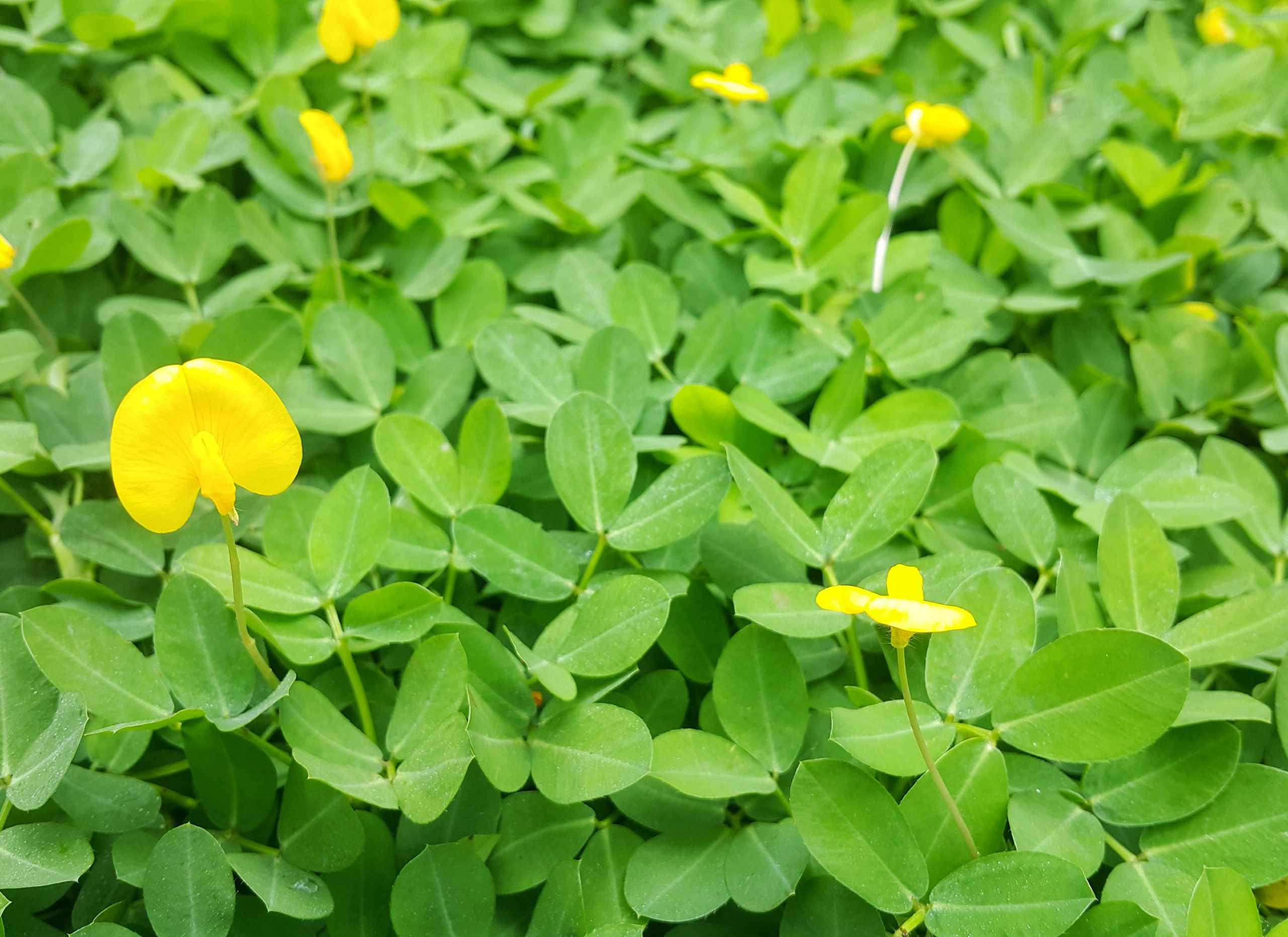
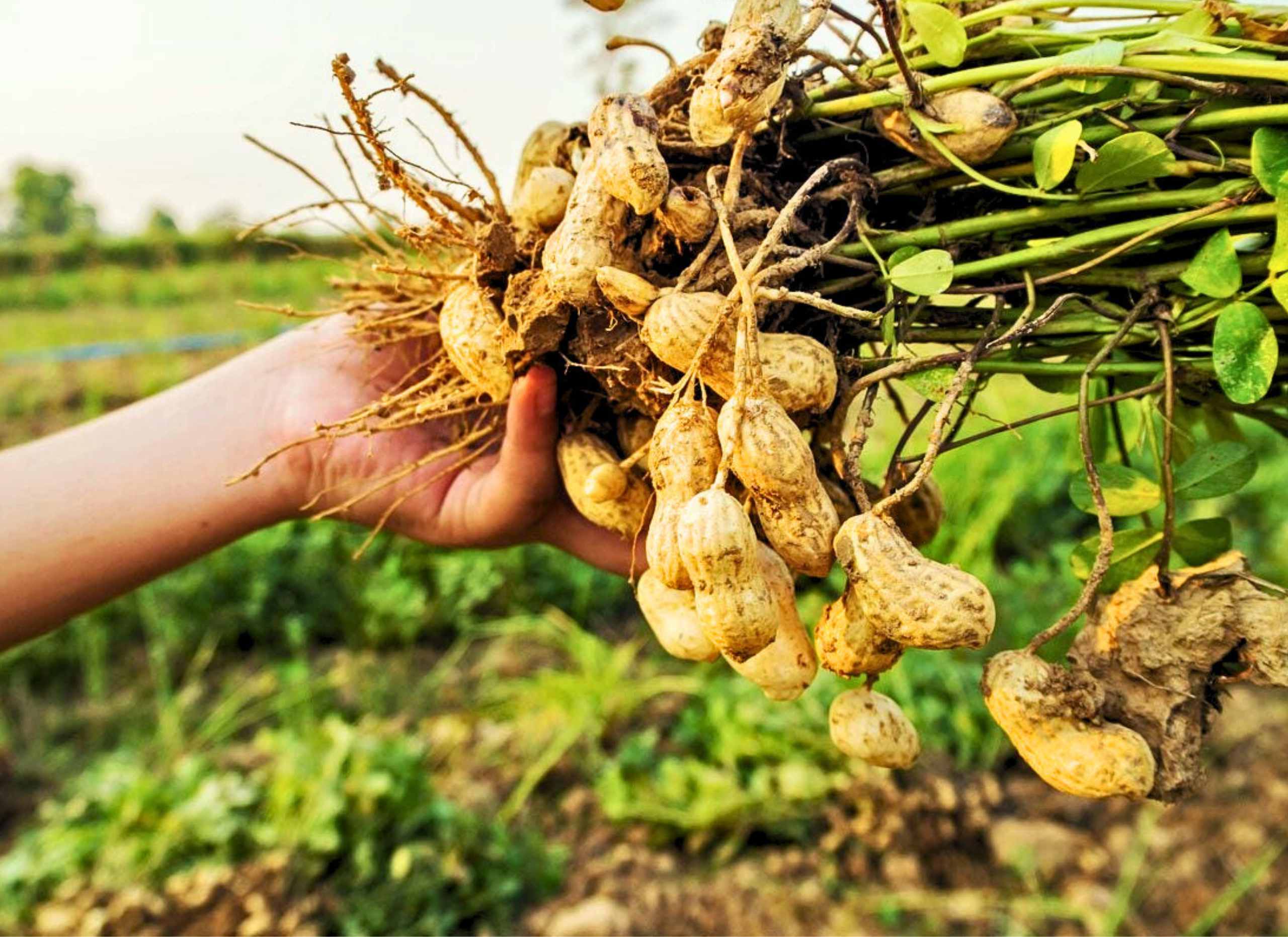
The peanut (Arachis hypogaea)
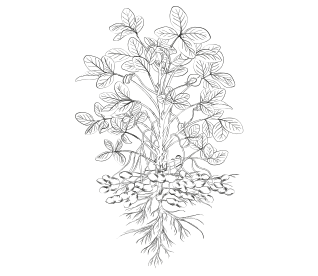
is an annual herbaceous plant that typically grows to a height of 30 to 50 cm (1-1.6 feet). It holds significant value as a food crop cultivated worldwide. South America is considered its probable origin, where cultivation has spanned thousands of years. Gradually, this crop spread across the globe, and today, peanut cultivation occurs commercially in numerous countries. China stands as the world’s leading peanut producer, generating over 18 million tons in 2022, followed by India, Nigeria, and the United States.
Classified under the Fabaceae (legume) family, the peanut prospers in warm, humid subtropical regions characterized by extended periods of heat. It requires a growing season of at least 120-150 frost-free days for proper maturation.
The peanut plant exhibits a unique growth pattern.
Its flowers emerge above ground, while the seed-bearing pods develop within the soil. This necessitates loose soil that allows peanut roots to penetrate and expand. Additionally, peanuts favor well-drained sandy soils with a pH between 5.5 and 7.0. The soil should also possess a high concentration of organic matter to provide the plants with essential nutrients.
During the leaf development stage (BBCH 13-19)
peanut plants experience an increased demand for phosphorus. In the early growth stages, phosphorus stimulates root system development, which is crucial for ensuring adequate water and nutrient uptake. This is particularly important for peanuts, as their fruits form underground.
Moreover, amino acids play a vital role during plant development. Amino acids serve as the fundamental building blocks for protein synthesis. Proteins fulfill structural and functional roles within cells. Enzymes, composed of amino acids, are essential for all biochemical processes in the plant, including those involved in photosynthesis, respiration, and nitrogen metabolism. All these processes impact peanut health and productivity.
Recommended foliar fertilizers for peanut for phosphorus-based foliar fertilizers, we recommend: Wonder Leaf Blue (N:P:K-10:53:10 + chelated Zn-2, w/w %) at an application rate of 2-4 kg/ha for peanuts. Wonder Leaf P 30 (N:P-4:30 + B-0.5, chelated Zn-0.5, amino acids-1, organic acids-4, w/w %) at an application rate of 1-2 l/ha. Additionally, consider using Wonder Leaf Amino 43, a foliar fertilizer containing 43% amino acids, at an application rate of 0.5 – 1 l/ha.
During the peanut branching stage (BBCH 21-29)
potassium becomes critically important due to its involvement in numerous physiological and biochemical processes. It plays a vital role in opening and closing stomata, which regulate water loss through transpiration. This helps maintain plant water balance and turgor pressure, essential for healthy shoot growth.
To replenish potassium levels in peanuts, we recommend using Wonder Leaf Red (N:P:K-10:20:30 + B-2, w/w %) at an application rate of 2-4 kg/ha. This foliar fertilizer not only enriches plants with essential elements but also helps them overcome stress conditions that could hinder or delay growth.
Wonder Leaf Zn 8, containing 8% chelated zinc, applied at a rate of 1-2 l/ha, positively influences peanut plants during the stem elongation stage (BBCH 31-39). It facilitates metabolism and various enzymatic processes, triggering the production of auxin growth hormones crucial for early development.
Furthermore, nitrogen plays a particularly important role during this stage, promoting overall plant growth, including the development of the root system, stems, and fruits.
To prevent nitrogen deficiency in peanuts, we recommend using Wonder Leaf Violet, a foliar fertilizer applied at a rate of 2-4 kg/ha (N:P:K-30:10:10 + SO3-15, Mo-0.5, w/w %).
The budding stage (BBCH 51-59)
represents the most critical growth phase for peanuts, as it sets the stage for proper fertilization. Boron plays a particularly crucial role during this stage, influencing the synthesis of pectin substances, essential components of the cell wall. This promotes proper bud growth and development.
To ensure adequate boron supply, we recommend using foliar fertilizers: Wonder Leaf Mono B 120 (B-9%) at an application rate of 1-2 l/ha, Wonder Leaf Mono B 11 (B-11%) at an application rate of 1-2 l/ha.
Additionally, we suggest employing Wonder Leaf Blossom (application rate of 4-5 l/ha), a foliar fertilizer that promotes active and prolonged flowering.
During the fruiting stage (BBCH 71-79)
nitrogen remains essential for the formation and development of peanut pods (fruits). Insufficient nitrogen supply can lead to a reduction in the number and size of pods.
At this stage, we recommend applying Wonder Leaf Violet at a rate of 2-4 kg/ha, providing 30% nitrogen. Additionally, supplying the plant with the complex nutrient blend found in Wonder Leaf Veg&Fruit (application rate of 1-2 l/ha) is beneficial.
It is important to note that nutrient requirements can vary depending on the peanut variety, soil conditions, and other factors. To determine the precise nutrient needs for your peanuts, a soil test is recommended.
Contact us in order to receive cooperation terms and details
Partners are our customers and suppliers, whom we care about and who determine our path.


