


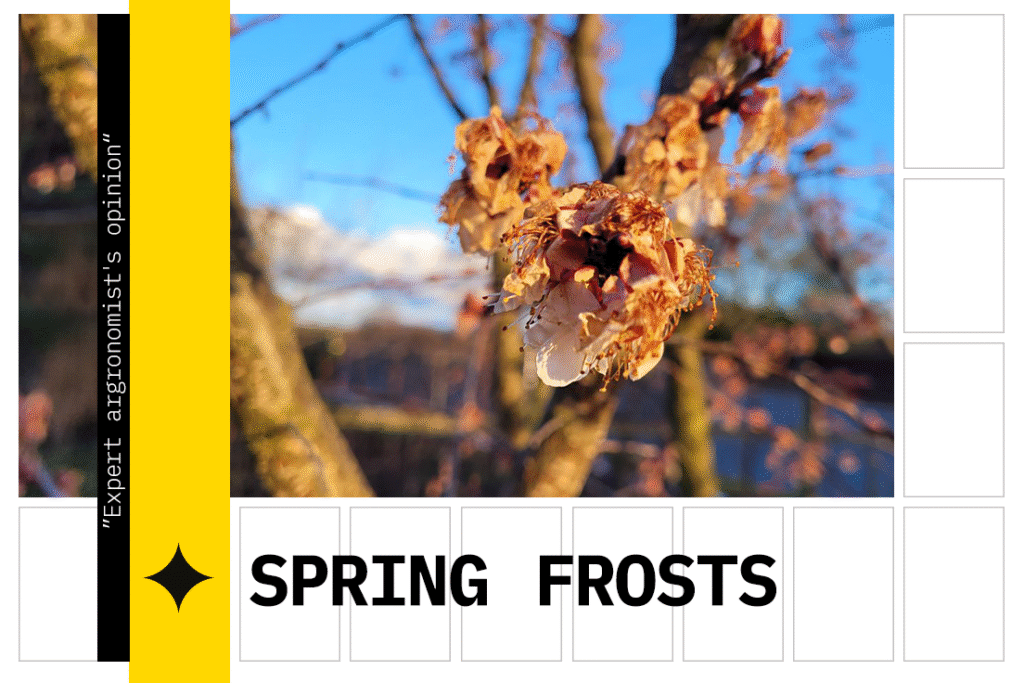
Spring Frosts
Spring Frosts
Throughout the growing season, plants are exposed to various abiotic, biotic, and agrotechnical stresses. While biotic stresses can be overcome to some extent with plant protection products, and agrotechnical stresses by adhering to all components of cultivation technology, How can plants be made more resistant to abiotic factors, such as frosts?
For most ordinary people, there is no difference between frost and freezing temperatures. However, for agricultural specialists, agrometeorologists, and crop producers, the difference is significant. Frosts in our region occur both in spring and autumn, which can pose a threat to plants.
Frosts are defined as short-term drops in the temperature of the near-surface air layer and soil surface to 0°C and below during the warm season when agricultural crops are vegetating. They occur at night or in the morning (before sunrise) in clear, calm weather. Temperature drops are also possible at other times of the day if there is a general cold snap.
Frost is a complex meteorological phenomenon determined by the combined action of weather-climatic, biological, and physico-geographical factors. Depending on the conditions of their occurrence, frosts are divided into three types:
- Advective
- Radiation
- Mixed (Advective-radiation)
Advective frosts are associated with the movement of cold air masses (with negative temperatures).
Radiation frosts occur as a result of thermal radiation from the underlying surface on calm, cloudless nights, leading to the cooling of the surface layers of the soil or vegetation cover.
Mixed frosts occur as a result of the arrival of cold air with a temperature slightly above 0°C and its subsequent cooling to negative temperatures during the night. Most late spring and early autumn frosts, which are the most dangerous for agricultural crops, fall into this category.
The damage that frosts can cause is undoubtedly significant. For fruit, vegetable, and melon crops, as well as corn, potatoes, buckwheat, and millet, frosts pose a threat almost every year. The negative impact of plant tissue freezing can lead to reduced crop yields, and in worse cases, to their death. Late spring frosts, which occur after a prolonged period of warm weather when agricultural crops are actively vegetating, are particularly dangerous.
The intensity of frosts depends on the thermophysical properties of soils, primarily their heat capacity and thermal conductivity. Moist soils, due to their higher heat capacity, cool down slower than dry soils and are therefore less susceptible to frost. However, analyzing data from the World Meteorological Organization regarding surface soil moisture (Fig. 1), we can conclude that the moisture level in our country does not exceed 25.4 mm, and in the southwest and east of Ukraine. The soil moisture level is below 5 mm. Soils with such moisture content will obviously quickly release heat and cool down.
Figure 1. Surface soil moisture as of April 5, 2025.
The onset of frosts during the flowering and fruit set stages of fruit trees can lead to a complete loss of the year’s harvest. Research shows that flowers and young fruit set die when the temperature drops below 0°C in a psychrometric shelter. Although in earlier stages of leaf development and flower buds, these plants can withstand frosts of greater intensity (up to 3-4°C below zero) in the air without damage.
It is known that frosts recur with a certain periodicity, causing damage to fruit trees (Fig. 2).
Figure 2. Frequency (%) of frosts in Ukraine
Frequency (%) of frosts during apple tree flowering
Frequency (%) of frosts during cherry tree flowering
Although it is extremely difficult to avoid the effects of frost. We at Wonder know how to protect and support plants from the negative effects of low temperatures. Taking into account advanced research in plant nutrition.
For example, research has shown that the application of K₂SO₄ combined with ZnSO₄ reduced the concentrations of hydrogen peroxide (H₂O₂) and malondialdehyde (MDA) in flowers after exposure to temperatures below 0°C, significantly increasing Spring Frosts resistance, soluble protein content, soluble carbohydrates, total phenolic compounds, proline, and enzyme activity.
Another study found that foliar application of a 2% potassium solution improved the frost resistance of olive leaves by increasing certain osmolytes (soluble carbohydrates, proline, protein, total phenol content; betaine and inositol are considered the most active osmolytes, playing a special role in cell protection) and antioxidant activity.
In a study on the effect on tomatoes, a fertilizer dose of 1% was found to be the most effective among the tested doses of foliar K₂SO₄ application. Providing significant frost resistance after 24 and 72 hours.
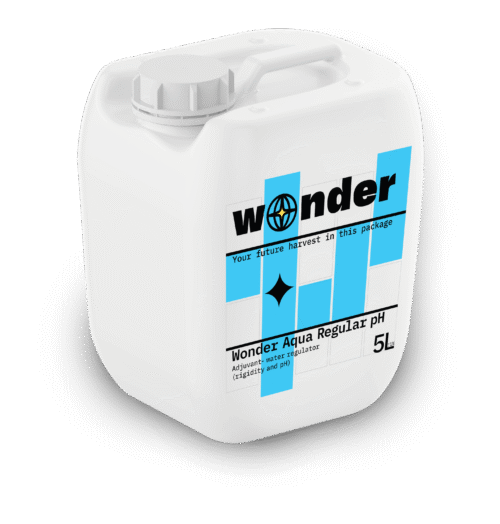
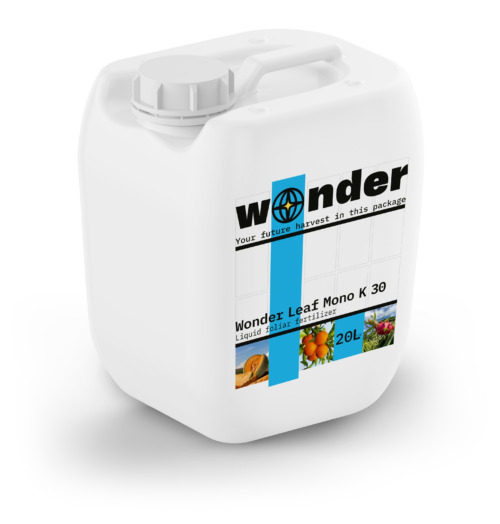
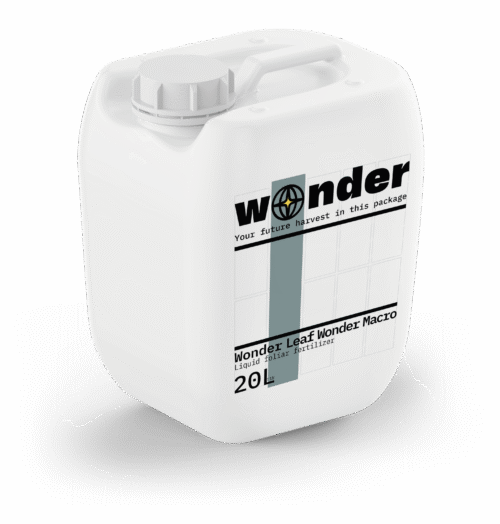
Having significant scientific confirmation of the effectiveness of foliar potassium application to support plants under low-temperature stress. We recommend using Wonder Leaf Red, which contains 30% potassium, and Wonder Leaf Yellow with 21% potassium content before predicted frosts to protect fruit trees and other agricultural crops from the negative effects of frosts and preserve the future harvest in the desired quantity and exceptional quality.
To order, call +38 067 0000 304









Тестовий комментар