DYNAMIC CONNECTION: NUTRIENTS AND PLANT PROTECTION
It is well-established that plant growth, development, and defense are significantly influenced by the nutrients present in the soil. It is an undeniable fact that nutrient availability is crucial not only for supporting vital biochemical processes but also for establishing effective protection against various pathogens.
In this context, the following questions remain open:
- What are the molecular mechanisms underlying the link between nutrient availability and defense responses for all nutrients?
- How do changing combinations of different nutrients affect plant defense signaling?
- How do plants balance their immune response to allow beneficial microorganisms, on which they rely for nutrient acquisition, while simultaneously defending against pathogens?
- What is the impact of nutrient-driven immune responses on soil microbial communities?
Macronutrients such as nitrogen, phosphorus, and potassium significantly influence plant defense mechanisms. They also support immune signaling. In addition, they contribute to physiological responses such as stomatal regulation. Micronutrients like zinc, copper, and iron are essential for balancing reactive oxygen species. They also help regulate other reactive compounds involved in the plant’s immune response.
Although there is considerable indirect evidence linking nutrient availability to plant protection, the molecular mechanisms underlying this process have only recently begun to be understood. This connection is still being explored at the molecular level.
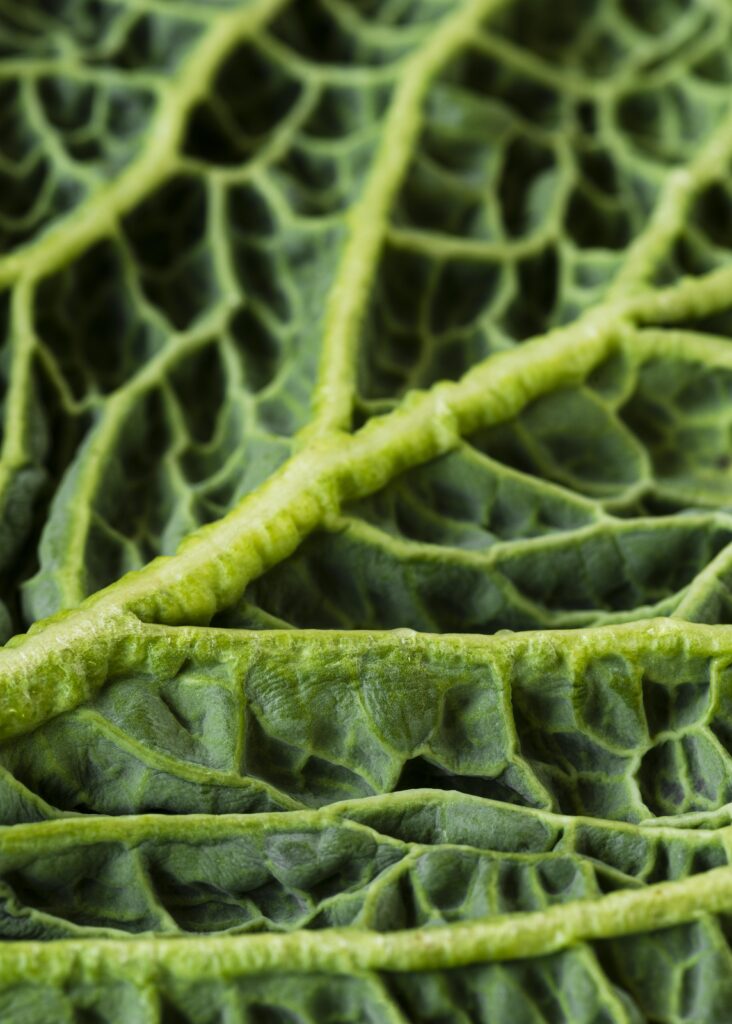
Macronutrients such as nitrogen (N), phosphorus (P), and potassium (K) are integral to the plant’s immune system. They provide the energy and building blocks necessary for the synthesis of defense compounds, activation of immune signaling pathways, and regulation of physical processes. For example, nitrogen, a key component of the amino group backbone in amino acids, is essential for protein synthesis. This includes a range of proteins involved in the plant’s multi-layered immune response, such as cytoplasmic and membrane receptors, pathogenesis-related proteins, transcription factors, and constitutive antifungal molecules.
Phosphorus serves as the cell’s energy currency in the form of ATP, phosphorylates protein kinases during defense signaling, and regulates gene expression during induced immune responses. Potassium also plays a crucial role by regulating stomata – a mechanism plants use to block pathogen entry.
Micronutrients, including zinc, copper, and iron, are equally important. They help maintain the homeostasis of reactive oxygen species and other reactive compounds involved in plant immune responses. Transition metals (Mn, Fe, Cu, etc.) play a crucial role in biological systems. They serve to stabilize substrates or reaction intermediates in enzyme active sites due to their electrostatic properties. Their enhanced reactivity makes them valuable for catalysis — altering the rates of chemical reactions or initiating them by substances (catalysts) that participate in the processes but are not part of the final products. However, their toxicity at high concentrations poses a significant challenge. Both plant pathogens and beneficial organisms must carefully regulate the levels of these elements to meet their physiological needs.
Summarizing the results of current research, the following key points are worth noting:
- Nutrient availability plays a crucial role in plant growth, as well as in establishing effective defense against various pathogens.
- C-terminally encoded peptides (CEPs) integrate nitrogen signaling with plant immune responses.
- PHR1 (phosphate starvation response1) is crucial in managing phosphate starvation and plant defense by regulating genes involved in both processes.
- Iron deficiency signaling and immune response converge at IMA1 (iron mobilization activity1) peptides to control iron uptake.
In conclusion, do not neglect the application of nutrients, as this is key not only to high and stable yields but also one of the ways to protect plants from the impact of harmful organisms that can cause irreparable damage to cultivated plants and lead to complete crop destruction.
We, at Wonder Corporation, have innovative and relevant solutions for improving plant nutrition and protection strategies through optimally designed nutrition schemes.
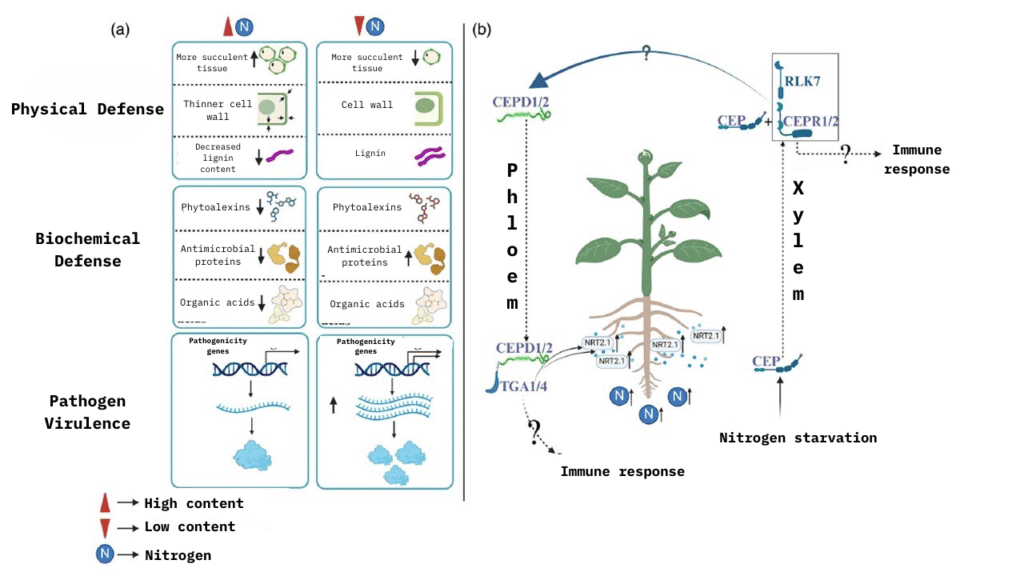
(a) Nitrogen (N) availability affects plant defense and pathogen interactions in numerous ways. High N levels lead to more succulent tissues, thinner cell walls, and reduced lignin content. This also impacts the production of defense metabolites such as phytoalexins, antimicrobial proteins, and organic acids, potentially increasing plant susceptibility to pathogens and herbivorous insects. Furthermore, nitrogen content regulates the expression of pathogenic effectors and virulence, while N-starvation stimulates pathogenicity-related genes.
(b) When nitrogen is limited, the peptide hormone CEP is produced in the roots, translocates to the shoot, and binds to its receptors: CEPR1, CEPR2, and RECEPTOR-LIKE KINASE 7 (RLK7). CEP and these receptors are crucial for initiating the immune response in the shoot and for coordinating the immune response triggered by nitrogen starvation.
The precise mechanism by which these CEP receptors trigger the immune response is yet to be fully understood. Once these receptors are activated, secondary signaling polypeptides, CEPD1 and CEPD2, are produced through a still unknown mechanism. These polypeptides then travel back to the roots. There, they influence the expression of the nitrate transporter gene NRT2.1 via the transcription factors TGA1 and TGA4. Given that TGA1 and TGA4 are established regulators of the immune response, it is likely they also play a role in linking nitrogen availability to immune responses in the roots. However, this connection has not been definitively confirmed. Overall, the CEP-CEPR-CEPD-TGA module serves as a central mechanism for integrating nitrogen availability with plant immunity. It coordinates both nutrient status and defense responses across different plant tissues.
🌱 To achieve optimal plant health and maximize your harvest, consider using Wonder fertilizers.
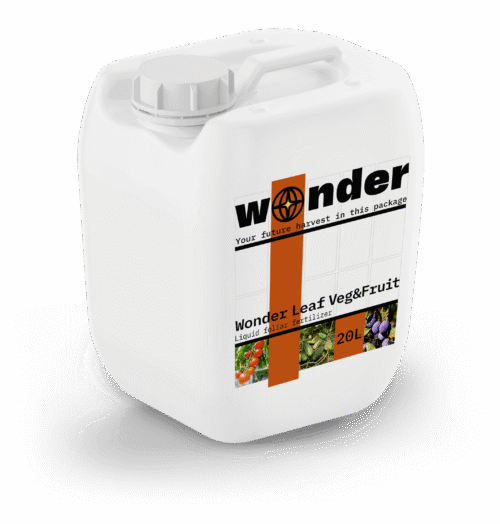
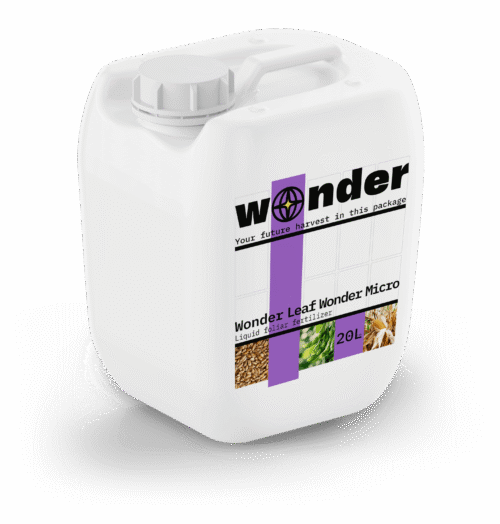
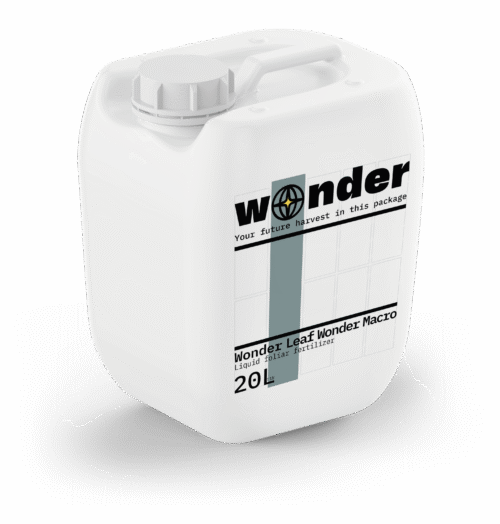
Products like Wonder Leaf Wonder Macro, Wonder Leaf Wonder Micro, and Wonder Leaf Veg&Fruit are formulated to provide essential nutrients that support vigorous growth, enhance stress resistance, and improve crop quality. By incorporating these fertilizers into your cultivation practices, you can ensure your plants receive the balanced nutrition they need throughout their development stages.
Call us: +38 067 0000 304
#agriculture #farming #farmers #plantnutrition #plantprotection #micronutrients #macronutrients #planthealth #plantgrowth