DISTINCTIVE ROLES OF AMINO ACIDS
Amino acids are composed of molecules containing an amino group, a carboxyl group, a hydrogen atom, and a side chain (R-group), all attached to a central carbon atom. Proteins are formed by combining 20 types of amino acids in various forms and ratios.
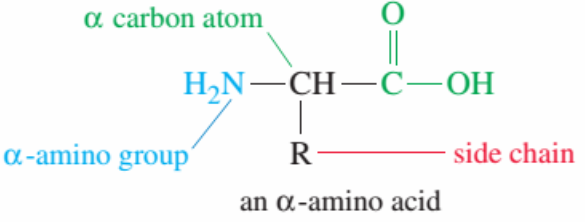
Figure 1
Many amino acids, including some not involved in protein synthesis, play active roles in plant development. They are also involved in the plant’s response to environmental stressors. Furthermore, amino acids serve as precursors for many primary and secondary metabolites. They play a key role in human nutrition, either as a source of nutrients or as essential components of the diet. Indeed, nine of the twenty-one proteinogenic amino acids cannot be synthesized by animals, including humans. Three others are not synthesized in sufficient quantities to meet metabolic needs. These nutritionally essential amino acids must be obtained from the diet, with the largest portion derived from plants. Unlike humans and animals, plants synthesize all twenty-one proteinogenic amino acids themselves.
Amino acids are essential growth stimulants that enhance plant metabolism. They are involved in numerous physiological processes that are directly or indirectly related to the synthesis of metabolites. Amino acids also act as precursors for protein biosynthesis, which is linked to plant growth, and function as buffers that help maintain pH within the plant cell and protect against ammonia toxicity. They are considered a source of carbon and energy. The exogenous application of amino acid solutions promotes plant growth by improving the rate of photosynthesis, chlorophyll biosynthesis, and gene expression in the plant. Amino acids also enhance the accumulation of protein, nutrients, and elemental substances in the plant.
Amino acids are involved in the stress defense mechanism in many plant species. They act as anti-stress agents because the application of amino acids allows plants to conserve energy by accelerating the absorption and transport of nutrients, which stimulates improved development.
They are considered chelators of metal ions in agricultural practices. Micronutrients chelated with various amino acids form electrically neutral molecules, which accelerates their absorption and transport within the plant.
Borass et al. (2011) investigated the effect of root and foliar application of amino acids on the growth of tomato plants under greenhouse conditions, and a significant increase in growth and yield was found in tomato plants treated with foliar and root applications compared to the control. The best results regarding plant height, leaf area, and yield values were obtained from the foliar application of amino acids.
Aslan (2019) studied the effects of applying humic-fulvic acids and amino acids on some yield and quality characteristics of curly lettuce (Lactuca sativa L.). The highest plant weight was obtained from the humic-fulvic acid + amino acid treatment. The highest values for marketable plant weight, head length, and head diameter were obtained from the amino acid application.
Moraditocha et al. (2012) studied the effect of root application of nitrogen and foliar application of amino acids on the yield of cowpea plants and found that the highest grain yield was obtained from their interaction.
Different amino acids play various roles in plant growth processes, nutrient availability, quality, and overall development.
Tyrosine and phenylalanine are linked to the biosynthesis of cinnamic acid (which is a major intermediate metabolite of both cinnamyl alcohol and cinnamaldehyde).
Such as cysteine, glutamine, glycine, histidine, and lysine act as chelating agents for the plant.
Aspartic acid, glutamine, lysine, methionine, phenylalanine, and threonine stimulate germination. Alanine, lysine, and serine are involved in chlorophyll synthesis. Meanwhile, hydroxyproline, proline, and serine regulate the water balance in the plant. Hydroxyproline and proline act as anti-stress agents (proline is particularly important as it accumulates in most plant species in response to various stresses), which contribute to improving the fertility of plant pollen and plant development. Serine, tryptophan, and valine are associated with auxin synthesis in plants. Alanine and arginine act as compounds that provide resistance to cold weather. Glutamic acid, known as a growth stimulant and an organic nitrogen reservoir, aids in the synthesis of proteins and other amino acids. Glycine is a precursor to polyamines, which are involved in cell division. Alanine is associated with hormone metabolism and resistance to viruses.
Despite the numerous functions of amino acids in plant development and stress protection, amino acids require nitrogen for their biosynthesis. Understanding how nitrogen is absorbed, stored, and transported by plants is of primary interest in amino acid biology. We at Wonder have an exceptional solution – WL Amino 43. It is an organic fertilizer with a 43% content of plant-derived free amino acids, further enriched with an organic form of nitrogen. This comprehensively addresses any plant issues caused by abiotic and agrotechnical factors.
📞 Contact our expert agronomists for advice: +38 (068) 580 94 70
Or write to us at: info@wonder-corporation.com — we are always available!
🌿 Choose effective solutions, tested with Wonder.